
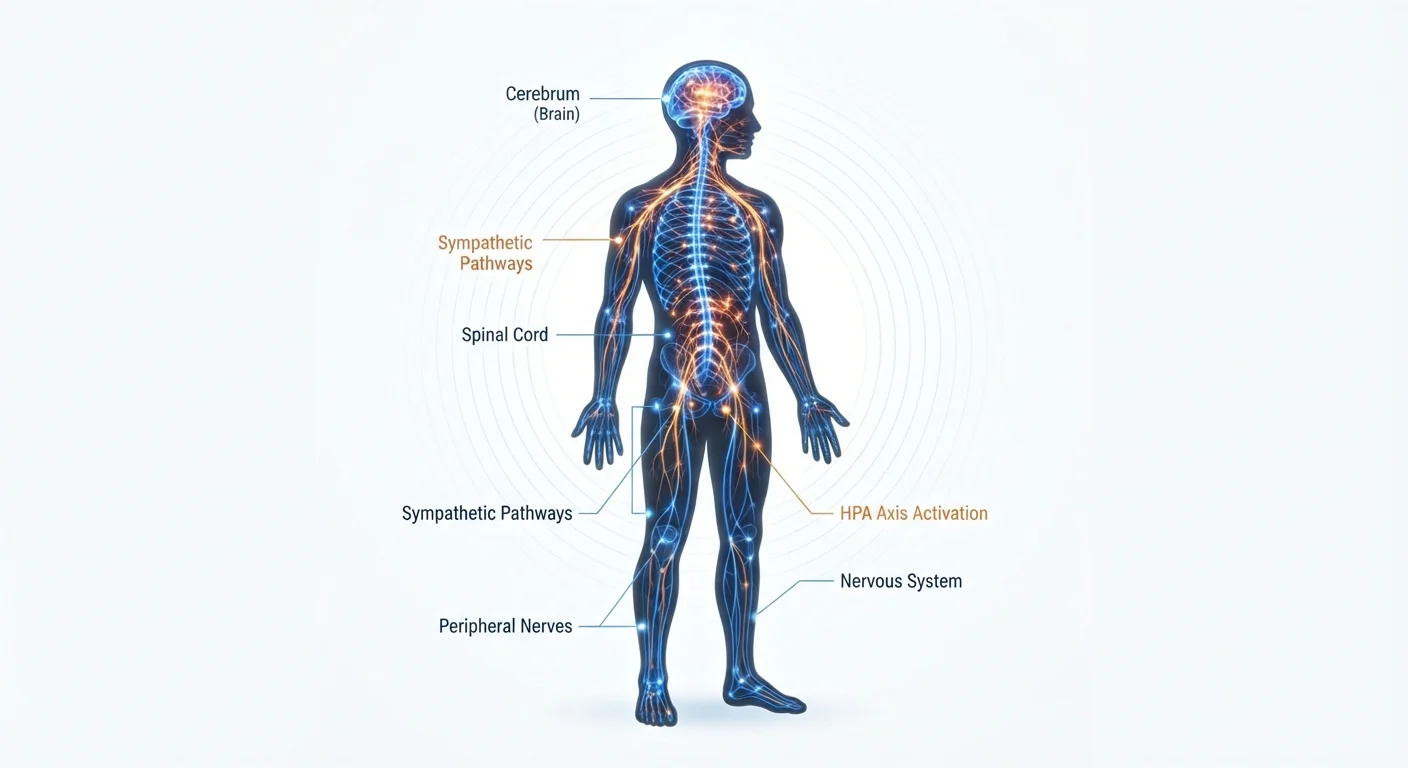
Your Body on Stress: The Basics
When you perceive a threat - whether it's a looming work deadline or a near-miss in traffic - your brain triggers an immediate chain reaction. The hypothalamus signals the adrenal glands to flood the bloodstream with adrenaline and cortisol. Heart rate climbs, breathing quickens, muscles tense, and non-essential functions like digestion are temporarily dialed back. This is the classic "fight-or-flight" response, and it's genuinely useful in short bursts.
The problem isn't the stress response itself. It's when the off-switch fails to engage. Modern stressors - financial pressure, social strain, chronic overwork - don't resolve in minutes the way a predator encounter would. The body can remain in a low-grade activated state for weeks or months, and that sustained activation is where health consequences begin to accumulate.
77%
Adults who report physical symptoms of stress
According to American Psychological Association survey data, a substantial majority of U.S. adults experience physical manifestations of stress, such as fatigue, headaches, or upset stomach.
2-3×
Increased heart disease risk under chronic stress
Research in cardiovascular medicine has found that individuals with high chronic stress exposure may face significantly elevated risk of cardiac events compared to lower-stress peers.
40%
Reduction in immune cell activity under chronic stress
Studies in psychoneuroimmunology have documented meaningful suppression of natural killer cell activity in individuals experiencing prolonged psychological stress.
How Chronic Stress Affects Major Body Systems
Cardiovascular system: Elevated cortisol and adrenaline raise blood pressure and heart rate. Over time, this places additional strain on artery walls and is associated with increased risk of hypertension and heart disease, according to research published in journals such as Circulation.
Immune system: While short-term stress can briefly boost certain immune functions, chronic stress suppresses immune response. This is why people under prolonged stress often report getting sick more easily - the body's defense mechanisms become less effective.
Digestive system: The gut and brain communicate constantly, and stress disrupts that dialogue. Chronic stress is linked to irritable bowel symptoms, altered gut microbiome composition, and slowed or accelerated digestion. For more on this connection, see our explainer on the gut-brain connection.
Brain and cognition: The hippocampus - critical for memory consolidation - is particularly sensitive to cortisol. Prolonged exposure has been associated with impaired learning, reduced working memory, and structural changes visible on brain imaging.
Track Your Physical Stress Signals
Many people notice emotional stress before physical symptoms, but for others it's the reverse - tension headaches, jaw clenching, or disrupted sleep can be early indicators that the body's stress load is high. Keeping a brief daily log of physical symptoms alongside mood can help you and a healthcare provider identify patterns. You don't need to wait for a crisis to check in with yourself.
The Inflammation Link
One of the most significant mechanisms connecting chronic stress to disease is inflammation. When stress hormones remain elevated, the body produces more pro-inflammatory signaling molecules called cytokines. While inflammation is a natural healing response, chronic low-grade inflammation is implicated in conditions ranging from cardiovascular disease to depression.
Research published in sources like the Proceedings of the National Academy of Sciences has found that people experiencing high levels of chronic stress show measurably elevated inflammatory markers. This helps explain why mental and physical health are so deeply intertwined - and why caring for one genuinely supports the other.
“Psychological stress and physical health are not separate domains - the body keeps a biological record of what the mind experiences, and inflammation is one of its clearest signatures.”
— Sheldon Cohen, Professor of Psychology at Carnegie Mellon University and leading stress and immunity researcher
What You Can Actually Do About It
The goal isn't to eliminate stress - that's neither realistic nor desirable. The aim is to build resilience: keeping the stress response proportionate and ensuring the body has enough recovery time. Several evidence-based strategies have demonstrated measurable effects on stress physiology.
- Physical movement reduces cortisol levels and promotes neuroplasticity. See how regular activity affects mental health for the research behind this.
- Social connection is a powerful buffer. Feeling supported by others is linked to lower cortisol and better immune function - research on social connection and mental health explores this in depth.
- Mindfulness and breathing practices activate the parasympathetic nervous system, helping the body shift out of fight-or-flight mode.
- Sleep is when cortisol naturally falls and cellular repair occurs - chronic sleep deprivation and chronic stress create a reinforcing cycle.
It's also worth examining how you cope. Some common strategies - avoidance, excessive reassurance-seeking - can inadvertently deepen stress over time. Learn which coping habits research flags as counterproductive.
If stress feels persistent, overwhelming, or is producing physical symptoms, talking with a healthcare professional is an important and appropriate next step. Recognizing when stress has become something more is a meaningful part of taking care of yourself.
This article is for general informational and educational purposes only and does not constitute medical advice. Always consult a qualified healthcare professional for personal health concerns or before making changes to your health routine.