Start with Your Documents
Before you search for flights or dream about destinations, confirm your passport situation. A US passport takes 6–8 weeks to process under routine service, or 2–3 weeks expedited — and those timelines can stretch during high-demand periods. Apply as early as possible through the US State Department.
Once you have a passport, research your destination's entry requirements. Visas, vaccination records, and health declarations vary widely by country and can change. Always verify current requirements directly through the destination country's official embassy website or the US State Department's travel portal — not travel blogs, which may be outdated.
Visa
An official authorization from a foreign government that permits you to enter their country for a specific purpose and duration. Some visas are obtained in advance; others are granted on arrival or through online systems.
STEP enrollment
The Smart Traveler Enrollment Program is a free US State Department service that registers your trip so embassies can contact you during emergencies or natural disasters in your destination.
Travel insurance
A type of insurance that can cover costs from trip cancellations, medical emergencies abroad, and other unexpected events during travel. Policy terms vary widely, so reviewing coverage details carefully is important.
Foreign transaction fee
A fee some banks and credit cards charge when you make purchases in a foreign currency or through a foreign financial institution. Not all cards charge this, so checking before travel can save money.
Travel advisory
An official government assessment of safety and security conditions in a foreign country, published to help travelers make informed decisions. The US State Department publishes advisories on a four-level scale.
Register your trip through the State Department's free STEP program. It alerts the nearest embassy if there's an emergency in your destination and makes it easier for consular staff to reach you if needed.
Choose a Destination That Matches Your Experience Level
Your first international trip doesn't need to be your most ambitious. Destinations with straightforward infrastructure, English-language support at major transit points, and low bureaucratic friction tend to make for smoother first experiences — but the right fit depends on your comfort level, interests, and budget.
Think practically: How comfortable are you navigating unfamiliar transit systems? Do you have any dietary restrictions that require communicating in another language? Are you traveling solo or with others? Honest answers shape a better destination choice than any "top 10" list.
Our destination guides offer candid, practical breakdowns of popular and emerging destinations — including transit, costs, and cultural norms — rather than generic highlights. For example, if Asia is on your list, see what first-timers actually encounter in Southeast Asia before committing to a booking.
Build a Realistic Budget Before You Book Anything
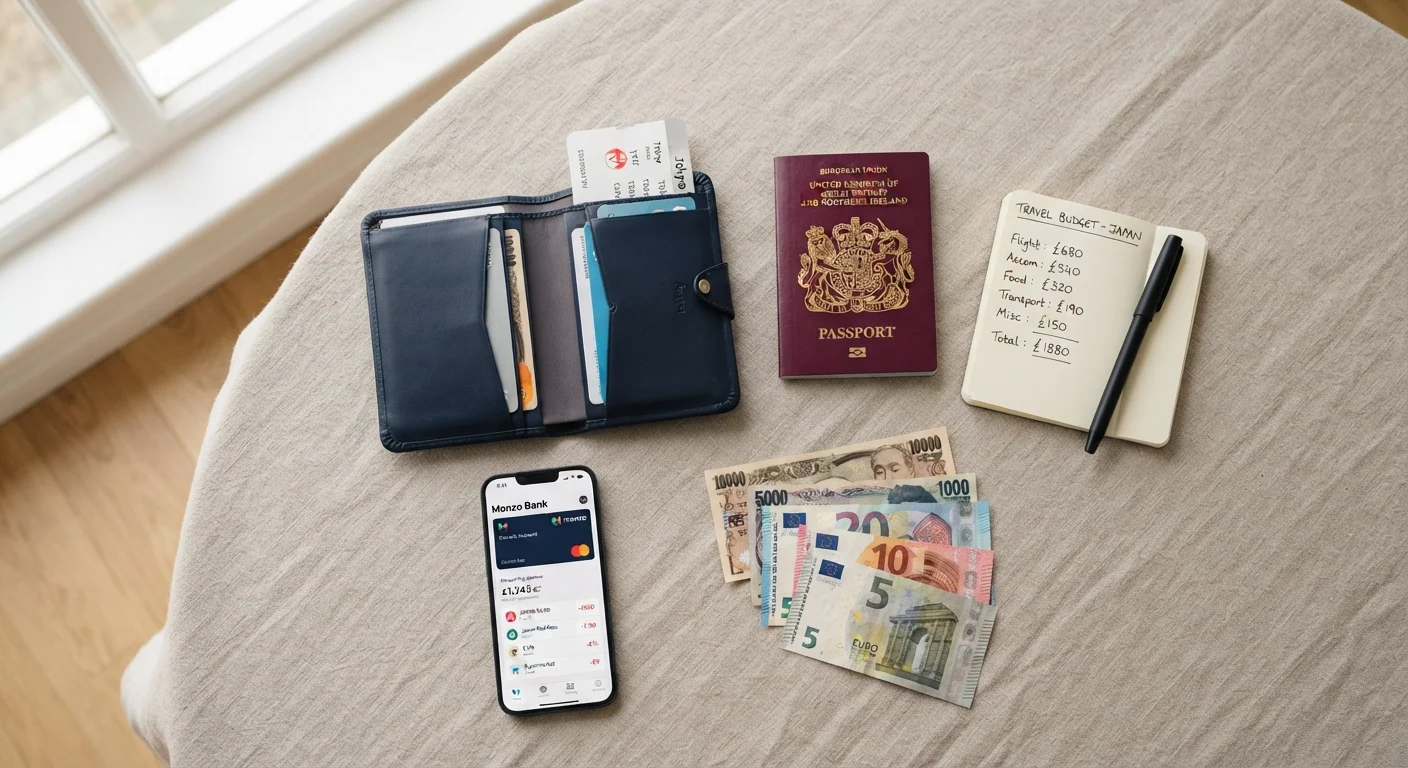
Booking flights before you have a written budget is one of the most common mistakes first-time international travelers make. Flights are often the most visible cost, but accommodation, food, local transport, activities, visa fees, and travel insurance add up quickly — sometimes doubling the ticket price.
Start with a category-by-category estimate: flights, lodging per night multiplied by trip length, average daily food spend, ground transportation, activities, and a contingency buffer of at least 10–15%. For a detailed walkthrough, see our guide on building a travel budget from scratch.
Build in a Contingency Buffer
Even carefully planned budgets encounter surprises — a missed connection, an unexpected entrance fee, or a medication you forgot to pack. Setting aside 10–15% of your total budget as a contingency fund means these moments are inconveniences rather than emergencies. Treat this buffer as already spent, and feel good if you don't need it.
Also handle your financial logistics before departure. Notifying your bank, understanding which cards charge foreign transaction fees, and knowing how to access cash abroad are all worth sorting in advance. Our pre-trip financial checklist covers these steps clearly.
Plan Your Itinerary Without Overloading It
First-time travelers consistently underestimate how much time transit, meals, and adjustment consume. A day that looks manageable on paper — museum in the morning, two neighborhoods in the afternoon, dinner reservation at night — often leaves people exhausted and behind schedule.
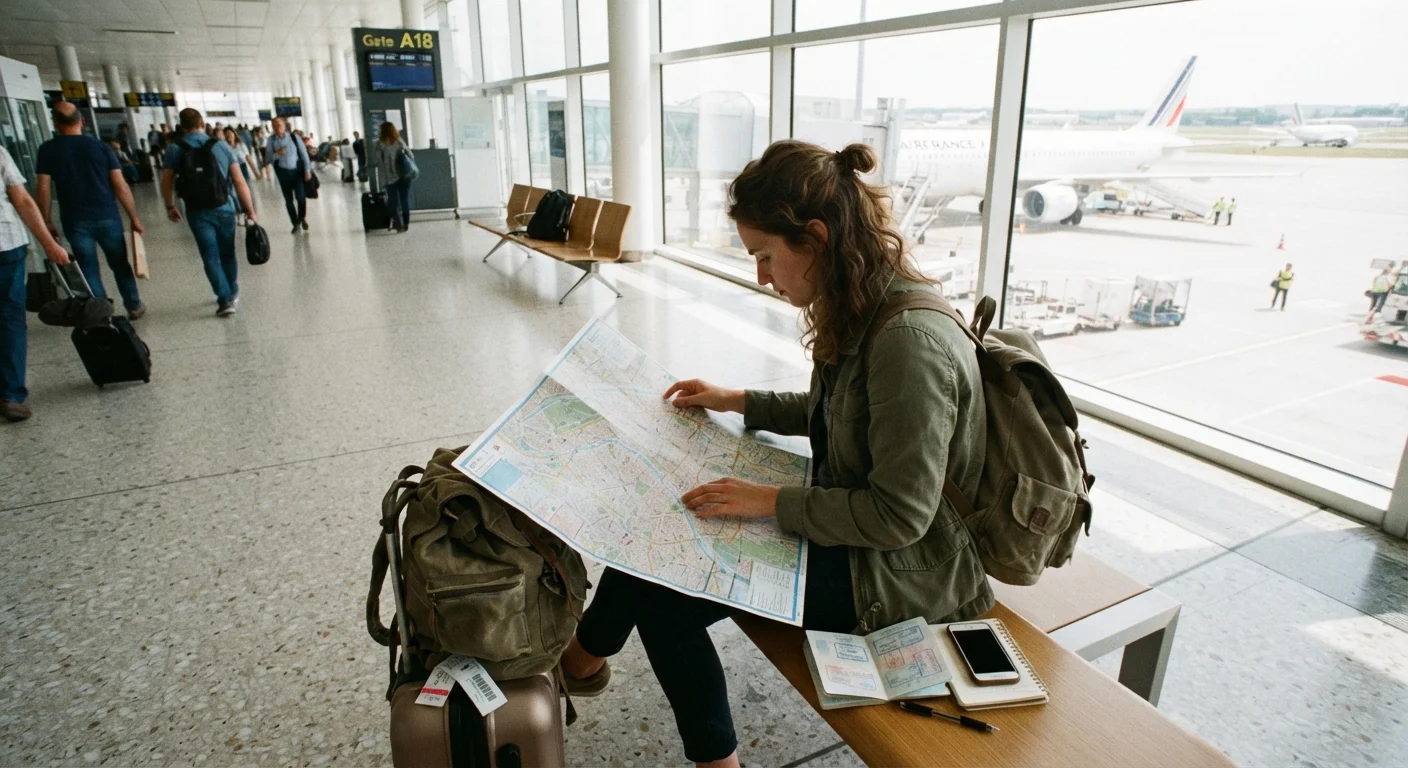
A more durable approach: anchor each day around one or two priorities, then fill remaining time loosely. Build in at least one completely unscheduled half-day during a week-long trip. If you're visiting multiple cities, read our framework for planning multi-city trips — routing and pacing decisions matter more than most first-timers realize.
Also plan your arrival day separately. Jet lag, delayed baggage, and unfamiliar transit can turn a "quick" airport-to-hotel journey into a two-hour ordeal. See what a realistic travel day actually looks like before setting any first-day expectations.
Pack Light and Pack Smart
Overpacking is almost universal among first-time international travelers and almost universally regretted. A carry-on-sized bag keeps you mobile, eliminates checked luggage fees on many routes, and removes the anxiety of waiting at baggage claim in an unfamiliar airport.
The most useful packing framework: start with your full list, then cut it by roughly a third. Clothing in neutral colors that layer and mix reduces volume without sacrificing versatility. What you forget can usually be purchased abroad — what you overpack, you carry every single day.
Don't Pack Medications in Checked Luggage
If your checked bag is delayed or lost, prescription medications in that bag create an immediate medical problem in an unfamiliar country. Always carry medications — in their original labeled containers — in your carry-on. If you take medications requiring refrigeration or needles, research airline and destination-specific rules well in advance and consult your healthcare provider.
Essentials that genuinely belong in your carry-on: passport and copies, any prescription medications (in original labeled containers), phone charger and adapters, your travel insurance documentation, and one change of clothes in case checked luggage is delayed.
The Week Before Departure
The seven days before you leave are for logistics, not new planning. Confirm all reservations and save confirmation numbers somewhere accessible offline. Check your destination's current travel advisory on the State Department website — conditions can shift. Download offline maps for your destination (many mapping apps support this) so you're not dependent on cellular data immediately upon arrival.
Make physical and digital copies of your passport photo page, visa documentation, travel insurance policy, and emergency contacts. Store copies separately from the originals — one in your bag, one emailed to yourself.
Finally, inform someone at home of your full itinerary and how to reach you. It's a low-effort step that provides real peace of mind for both you and them. For a broader picture of what thoughtful trip preparation looks like, see what actually goes wrong when travelers arrive without a plan — it's a useful calibration before any first international trip.
This article provides general travel planning information only. Entry requirements, visa rules, health regulations, and travel advisories change frequently. Always verify current requirements through official government sources — including the US State Department and the destination country's official embassy — before traveling.