Culture and Character: Old Soul vs. New Boom
New Orleans carries the weight — and the richness — of over 300 years of history. The French Quarter's iron-lace balconies, the second-line brass band tradition, and the Mardi Gras cycle aren't tourist inventions; they're living cultural practices with deep roots in African, French, Spanish, and Caribbean heritage. The city moves at its own pace, and first-time visitors often describe an almost disorienting sense of being somewhere genuinely unlike anywhere else in the US.
Nashville's identity is equally real but younger and faster-moving. Built on the country music industry, the city has transformed dramatically over the past two decades, attracting a wave of transplants, new hospitality infrastructure, and a broader music scene that now extends well beyond country. That energy is infectious — but it also means Nashville in 2024 feels noticeably more polished and commercially oriented than it did a decade ago.
For context on how city travel dynamics compare to slower-paced alternatives, see our guide to urban vs. rural travel.
| Criterion | New Orleans, LA | Nashville, TN |
|---|---|---|
| Cultural depth | 300+ years, layered heritage | Music-industry-rooted, rapidly evolving |
| Signature food | Creole and Cajun cuisine | Hot chicken, meat-and-three |
| Live music style | Jazz, blues, funk — organic venues | Country, rock — honky-tonk strips |
| Nightlife character | Gritty, atmospheric, late-night | High-energy, commercial, party-focused |
| Walkability | Strong in French Quarter/Marigny | Good downtown; car needed elsewhere |
| Summer climate | Very hot, very humid | Hot and humid, slightly less extreme |
| Tourism growth trajectory | Stable, established destination | Rapid growth, rising costs |
Food, Music, and Nightlife: Where Each City Wins
Food: New Orleans has one of the most distinctive culinary identities of any American city. Dishes like gumbo, étouffée, red beans and rice, and beignets aren't approximations of something else — they're originals rooted in a specific regional tradition. Nashville counters with its own comfort-food culture: hot chicken (a genuinely spicy fried chicken preparation), meat-and-three plate lunch diners, and a growing chef-driven restaurant scene that has earned national attention.
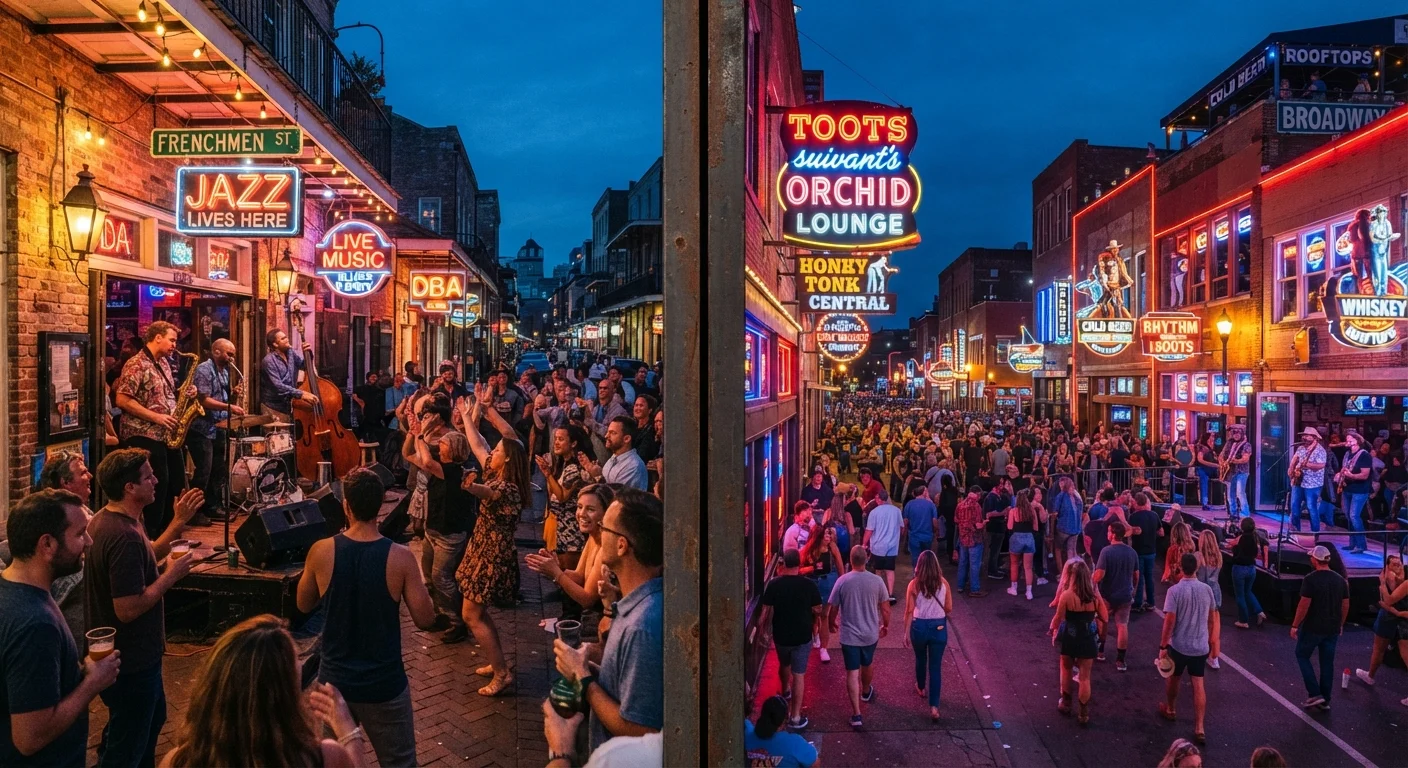
Music: Both cities are fundamentally shaped by music, but the experience is different on the ground. In New Orleans, jazz, blues, and funk emerge organically — from street corners on Frenchmen Street, from second-line parades, and from clubs where the music is the draw, not the backdrop. Nashville's Broadway strip is spectacular in its own right: dozens of live bands playing simultaneously across adjoining honky-tonks, free to enter, running all day and deep into the night.
Nightlife: Bourbon Street is louder and messier than its reputation suggests — worth one night, not necessarily more. Frenchmen Street in the Marigny neighborhood offers a more local, music-focused alternative. Nashville's Broadway and the surrounding Gulch area skew toward a younger bachelor/bachelorette party demographic, which shapes the crowd and the energy significantly.
#1
New Orleans' consistent US food city ranking
New Orleans has repeatedly appeared atop national food destination rankings by outlets including Condé Nast Traveler and Food & Wine magazine.
~16M
Annual visitors to Nashville
Nashville Tourism reported approximately 16 million visitors annually in recent pre-pandemic figures, reflecting the city's dramatic tourism surge over the past decade.
185+
Live music venues in Nashville
Nashville is estimated to host over 185 live music venues, earning it the title 'Music City' and supporting one of the densest concentrations of live performance spaces in the US.
Practical Considerations Before You Book
Weather: Both cities run hot and humid in summer. New Orleans' peak humidity (June–August) is genuinely punishing; spring and fall are the most comfortable windows. Nashville summers are slightly more forgiving, and the city's fall foliage adds a seasonal draw that New Orleans lacks.
Safety: Both cities have neighborhoods with elevated crime rates. In New Orleans, staying aware of surroundings — particularly outside the main tourist corridors late at night — is standard advice. Nashville's downtown tourist zone is generally considered safe, though as with any major city, exercising normal urban awareness is prudent. Always verify current travel conditions through official sources before your trip.
Getting around: New Orleans' walkable French Quarter and the streetcar system make it possible to navigate without a car for much of a typical visit. Nashville's spread-out geography means rideshare or a rental vehicle is often more practical beyond the immediate downtown area.
If you enjoy comparing city dynamics across different countries, our Mexico City vs. Guadalajara comparison applies a similar framework to two very different Mexican metropolises.
Major Events Affect Everything
Both cities host large-scale annual events that dramatically affect accommodation pricing, availability, and crowd levels. New Orleans' Mardi Gras season and Jazz Fest draw massive crowds; Nashville's CMA Fest and New Year's Eve celebrations do the same. If your travel dates overlap with these events, plan and book well in advance — and set expectations accordingly for noise levels and street congestion.