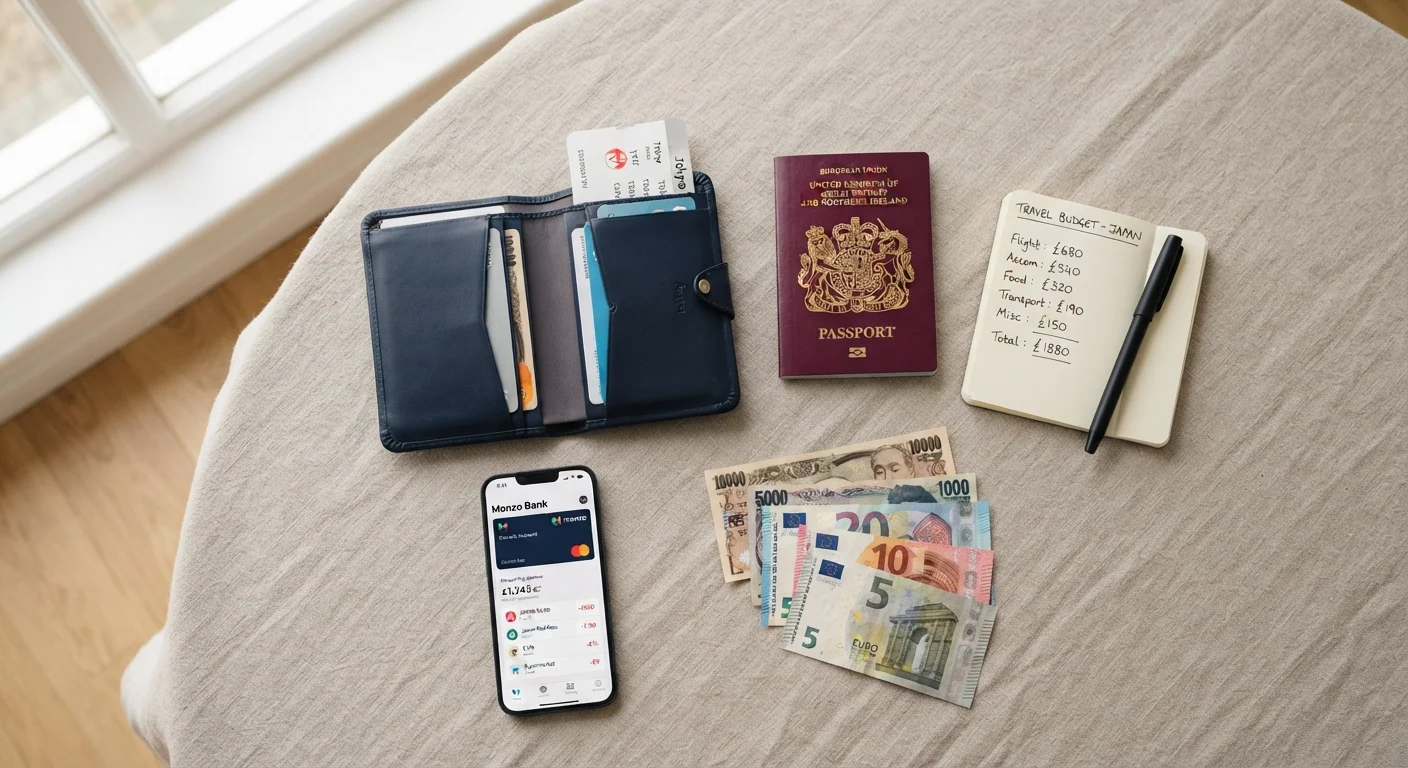
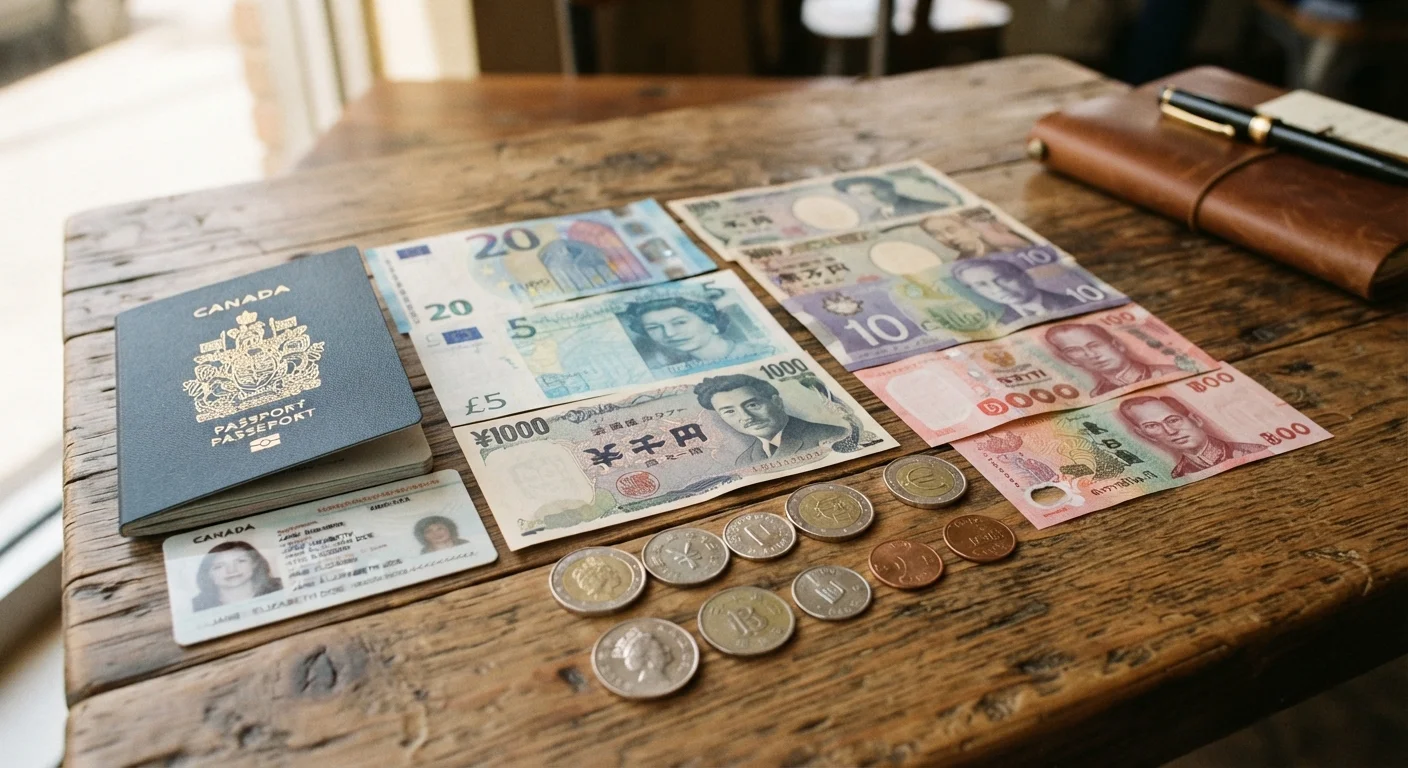
Why Exchange Method Matters More Than You Think
Most travelers focus on the exchange rate they see quoted — but the rate is only half the picture. The other half is the spread and fees layered on top, which vary dramatically depending on where and how you exchange money. A method that looks convenient can quietly cost you 5–8% of every dollar you convert. Before you travel, it helps to understand each option on its own terms.
| Typical airport kiosk spread | 5–12% above interbank rate (General industry range; varies by provider and currency pair) |
| Common foreign transaction fee (cards) | 1–3% per transaction (Varies by card issuer; many travel-oriented cards waive this fee) |
| ATM operator fee range | $2–$5 flat per withdrawal (or local equivalent) (Varies by country and ATM network) |
| DCC markup estimate | 3–7% above mid-market rate (General consumer finance guidance; varies by terminal operator) |
| Interbank rate visibility | Publicly available via Visa, Mastercard, and financial data sites (Use as a baseline to evaluate any rate you're offered) |
For a fuller picture of how destination economics affect your travel budget, see how infrastructure and local wages shape what a country actually costs.
The Main Currency Exchange Methods Explained
Airport and Hotel Exchange Kiosks
These are the most convenient and typically the most expensive option. Kiosks earn revenue by offering a rate significantly worse than the interbank rate — the wholesale rate at which banks trade currency with each other. Additional flat fees per transaction are common. Use these only for small amounts of emergency cash when no other option is immediately available.
ATMs Abroad
Withdrawing local currency from a foreign ATM is generally one of the more cost-efficient methods for most travelers. Your home bank's debit network converts currency close to the interbank rate, though two fees can apply: a foreign transaction fee from your bank (often 1–3%) and a fee charged by the ATM owner. Networks like Visa and Mastercard publish their daily conversion rates publicly. Always choose to be charged in the local currency when prompted — selecting your home currency triggers Dynamic Currency Conversion (DCC), a process where the ATM operator, not your bank, sets the rate, usually at a significant markup.
Bank and Credit Union Exchanges
Many US banks will exchange currency at a branch or order foreign cash for pickup. Rates are typically better than airport kiosks but worse than ATM withdrawals. Some banks waive fees for account holders. This is a reasonable option if you want a small amount of cash in hand before departing.
Credit Cards for Direct Purchases
Paying directly with a credit card often yields a rate very close to the interbank rate, especially on networks that apply their own conversion. Foreign transaction fees — commonly 1–3% per purchase — are the main cost to watch. Cards marketed specifically to travelers frequently waive these fees entirely. Paying by card also creates a paper trail useful for disputes.
Peer-to-Peer and Specialist Exchange Services
Services that match buyers and sellers of currency, or that use mid-market rates and charge transparent flat or percentage fees, have grown in availability. These are often accessed through apps or online platforms. They can offer competitive rates for large transfers but may not be ideal for on-the-ground cash needs. Verify that any service you use is registered with a relevant financial regulator before transferring funds.
Interbank Rate
The exchange rate at which major banks trade currency with each other. It serves as the benchmark 'true' rate. Consumers almost never access this rate directly — most exchange methods apply a markup on top of it.
Spread
The gap between the interbank rate and the rate a consumer actually receives. Providers profit from this difference without always disclosing it as a fee.
Dynamic Currency Conversion (DCC)
A service offered at foreign ATMs and card terminals that converts your transaction into your home currency at the point of sale. The rate is set by the terminal operator, not your bank, and is typically less favorable. Always choose the local currency instead.
Foreign Transaction Fee
A percentage-based fee, typically 1–3%, added by a card issuer on purchases or withdrawals that are processed in a foreign currency or routed through a foreign bank.
ATM Operator Fee
A flat fee charged by the owner of the ATM you use abroad, independent of any fees your home bank charges. This fee is disclosed on-screen before you confirm the transaction.
Mid-Market Rate
Another term for the interbank or 'real' exchange rate — the midpoint between buy and sell prices. Some specialist exchange services advertise that they use this rate plus a transparent fee.
Key Fee Types to Identify Before You Exchange
Not all fees are labeled clearly. Here are the main ones to identify:
- Spread: The difference between the rate you receive and the interbank rate. Never labeled as a fee, but always present.
- Foreign transaction fee: A percentage added by your card issuer on purchases or withdrawals made in a foreign currency.
- ATM operator fee: A flat fee charged by the foreign bank or ATM owner per withdrawal, separate from your home bank's fees.
- Dynamic Currency Conversion (DCC): An optional conversion applied at point of sale or ATM, almost always at a worse rate. Always decline it.
- Service or commission fee: A flat charge added by exchange bureaus or bank branches per transaction.
5–12%
Typical spread at airport exchange kiosks
Industry estimates suggest airport kiosk rates commonly sit 5–12% worse than the interbank rate, making them among the most costly options for travelers.
3–7%
Estimated Dynamic Currency Conversion markup
Consumer finance sources generally estimate DCC adds 3–7% over the mid-market rate — a cost triggered simply by accepting the terminal's currency conversion offer.
Before you depart, run through a financial checklist that covers bank notifications, fee structures, and card settings — a pre-trip financial checklist for budget travelers covers this step by step.
Practical Guidelines for Most Travel Situations
No single method fits every trip, but a few principles hold broadly:
- Use a fee-free debit or credit card as your primary payment method where cards are widely accepted.
- Withdraw local cash from in-network ATMs in reasonably sized amounts to minimize per-transaction fees.
- Avoid airport kiosks except as a last resort for small amounts.
- Always decline Dynamic Currency Conversion at ATMs and card readers.
- Check your bank's specific fee schedule before departure — policies vary widely.
For destinations where cash remains dominant, plan withdrawals around branch ATMs at established local banks rather than standalone machines in tourist areas, which may carry higher operator fees.
Currency strategy connects to broader budget planning. If you're comparing the true cost of different routes, overland vs. flying trade-offs can help you account for transit costs alongside your exchange planning.
This article provides general financial information for educational purposes only. It is not personalized financial or legal advice. Fees, rates, and service terms change frequently — verify current details directly with your bank, card issuer, or service provider before traveling.