How a Cat's Digestive System Actually Works
Before comparing food formats, it helps to understand what a cat's gut is designed to do. Cats are obligate carnivores — meaning they must get specific nutrients (like taurine, arachidonic acid, and preformed vitamin A) from animal tissue. Unlike dogs or humans, cats have a limited ability to synthesize these from plant sources.
A cat's digestive tract is relatively short compared to omnivores, which is well-suited for processing protein and fat rapidly. Cats also have a naturally low thirst drive. In the wild, they obtained most of their water from prey — which is about 70–75% moisture. This biological reality is central to the wet-vs-dry debate. For a deeper look at how cats' nutritional needs translate to label-reading and portion sizing, see our Cat Nutrition 101 guide.
Cats and Carbohydrates
Cats lack the salivary enzyme amylase, which most omnivores use to begin breaking down starches in the mouth. Their pancreas does produce some amylase, so they can digest carbohydrates to a degree — but they are not metabolically optimized for high-carb diets. This is one reason many veterinary nutritionists prefer diets that keep carbohydrate levels low for cats.
Digesting Wet Food: What Happens Inside
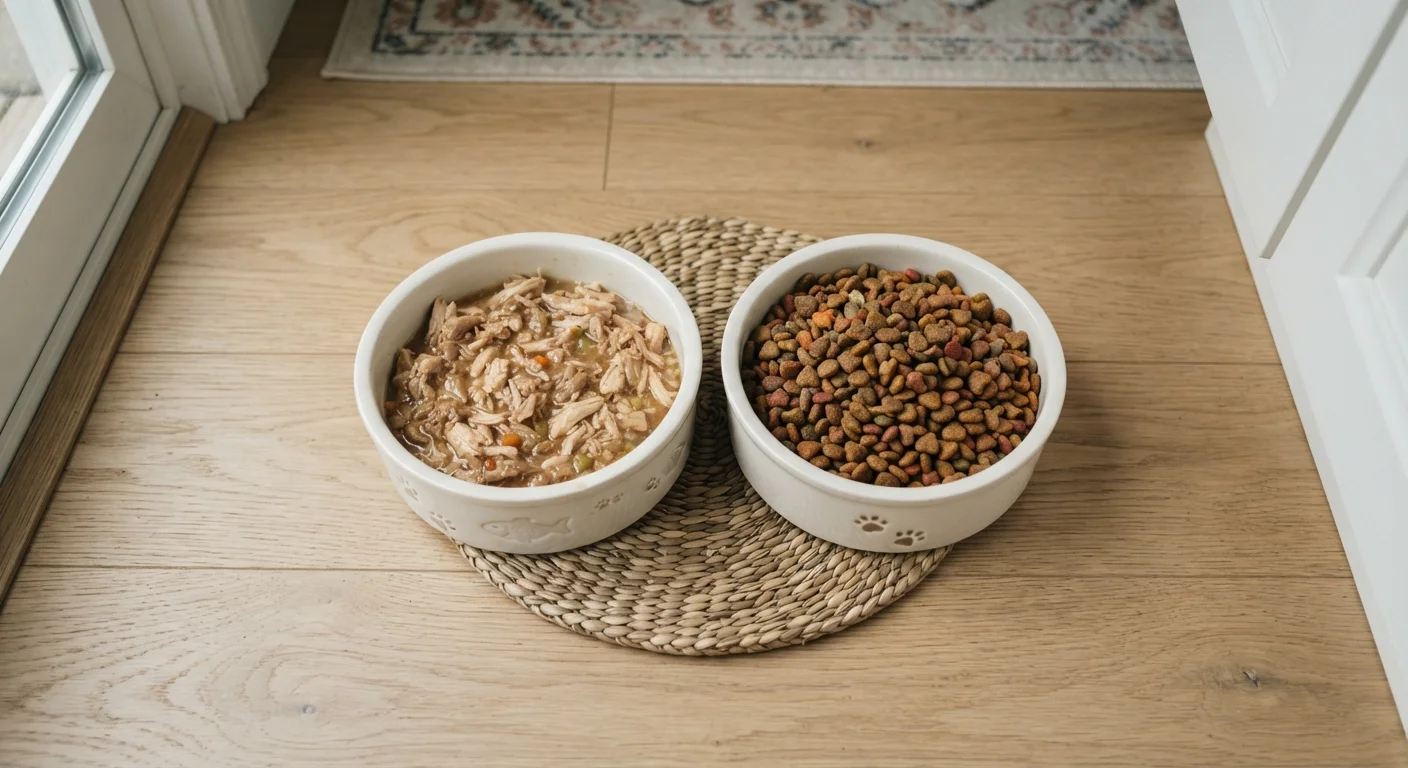
Wet food — whether pâté, chunks in gravy, or shredded formats — typically contains 70–80% moisture, and is usually higher in animal protein and lower in carbohydrates than dry food. For a cat's digestive system, this composition closely mirrors what they would naturally consume.
The higher water content means cats eating wet food passively take in significantly more fluid, which supports kidney filtration and helps prevent the concentration of minerals in urine that can lead to crystal formation. Protein-rich wet food also tends to produce a more stable blood glucose response compared to high-carbohydrate diets, which some veterinary nutritionists consider relevant for long-term metabolic health.
One practical downside: wet food spoils within a few hours at room temperature and must be refrigerated after opening. This limits its use for free-choice feeding.
70–80%
Moisture in typical wet cat food
This closely mirrors the water content of small prey animals cats evolved to eat, according to veterinary nutrition research.
~6–10%
Moisture in dry kibble
Cats eating only dry food must compensate through drinking — a behavior their biology doesn't strongly reinforce.
~50%
Cats affected by kidney disease by age 15
Chronic kidney disease is among the most common conditions in older cats; adequate hydration throughout life is considered a key preventive factor by many veterinarians.
Digesting Dry Food: What Happens Inside
Kibble is made through a process called extrusion — ingredients are cooked under high heat and pressure and formed into small pellets. This process is efficient for manufacturing but requires starches to hold the kibble's shape, which is why dry food typically contains 20–50% carbohydrates — significantly more than a cat's natural diet.
Because cats have a low thirst drive and get minimal moisture from dry food (about 6–10%), cats eating exclusively dry food often exist in a mild chronic dehydration state. Over time, this can put strain on the kidneys and urinary tract. That said, many cats live long healthy lives on dry food — particularly when fresh water is always available and the cat drinks reasonably well.
Dry food does offer some mechanical abrasion on tooth surfaces as cats chew, which some believe supports dental health. However, veterinary dentists note that the evidence for kibble preventing dental disease is limited — a topic explored further in our Cat Myths article.
| Criterion | Wet Cat Food | Dry Cat Food (Kibble) |
|---|---|---|
| Moisture content | 70–80% | 6–10% |
| Typical protein level | High (animal-based) | Moderate (varies by brand) |
| Carbohydrate content | Generally low | Often 20–50% |
| Calorie density | Lower per gram | Higher per gram |
| Urinary tract support | Strong (high moisture) | Limited without extra water |
| Dental abrasion | Minimal | Some (evidence limited) |
| Spoilage risk | Spoils within hours | Stable at room temperature |
| Cost per calorie | Generally higher | Generally lower |
Hydration: The Factor Most Owners Underestimate
Perhaps the most consequential difference between the two formats is moisture content. Cats evolved to meet most of their hydration needs through food, not a water bowl. When a cat eats dry kibble, they would need to drink substantially more water to compensate — but their instincts don't always prompt them to do so.
Chronic low-level dehydration is associated with increased risk of lower urinary tract disease (FLUTD) and, over time, chronic kidney disease — two of the most common conditions in domestic cats. This doesn't mean dry food causes kidney disease in every cat, but hydration is a meaningful variable worth managing. You can learn more about how fluid intake affects digestion generally in our guide to hydration and nutrition.
If your cat eats primarily dry food, strategies like water fountains (cats often prefer moving water), adding water to kibble, or incorporating some wet food can all help improve daily moisture intake.
This article provides general educational information about cat nutrition and is not a substitute for personalized veterinary advice. Always consult your veterinarian about the best diet for your individual cat's health needs.