
Why Home Workouts Deserve a Real Look
The idea that you need a fully stocked gym to get fit is one of the most persistent - and discouraging - myths in fitness culture. Research consistently shows that bodyweight training and minimal-equipment workouts can deliver meaningful improvements in strength, cardiovascular health, and flexibility. If you've been putting off starting because your setup doesn't look like a gym, it's worth reassessing what actually matters.
That said, working out at home does come with real trade-offs. Understanding both the advantages and the limitations upfront helps you set expectations, invest wisely, and build a routine that actually sticks. See also: common fitness myths debunked for more on what the evidence really says.
No commute - exercise fits around your schedule
Removing travel time is one of the most cited reasons people stick with home workouts. Even a 10-minute session becomes viable when there's no gym trip involved.
Lower ongoing cost than a gym membership
A basic setup - mat, resistance bands - can cost less than two months of a mid-range gym membership, with no recurring fees.
Privacy reduces self-consciousness
Many people, especially beginners, find it easier to focus and experiment with movements without the social pressure of a gym environment.
Bodyweight training is genuinely effective
Exercises like push-ups, squats, lunges, and planks target major muscle groups and can be progressively challenging without any equipment.
Flexible scheduling, including early mornings or late nights
You're not bound by gym hours, which matters a lot if your schedule is irregular or unpredictable.
The Honest Downsides to Working Out at Home
Home workouts are genuinely effective, but they're not without friction. Knowing where the challenges tend to show up can help you plan around them rather than being caught off guard.
Limited resistance progression without added equipment
Bodyweight alone eventually plateaus for strength goals - adding resistance bands or weights becomes necessary to keep progressing.
Home distractions can interrupt focus
Notifications, family members, and household tasks compete for attention in ways a dedicated gym space doesn't. Establishing clear boundaries helps, but it takes intentional effort.
Motivation can be harder without external accountability
The social environment of a gym - seeing others work out, having a trainer nearby - provides cues that are absent at home. Finding digital or community alternatives can help fill that gap.
Cardio options are narrower without machines
High-intensity interval training and jump rope can substitute effectively, but sustained steady-state cardio is harder to replicate without a treadmill or bike.
Form feedback is harder to get
Without mirrors or a trainer, it can be difficult to assess whether your technique is safe and effective. Video check-ins or app-based coaching can partially address this.
When to Consult a Professional
If you're new to exercise, returning after an injury, pregnant, or managing a chronic health condition, it's worth speaking with a healthcare provider or certified fitness professional before starting. They can help you tailor a routine that's appropriate for your situation. A general home workout guide like this one is not a substitute for individualized guidance.
What You Actually Need vs. What's Optional
Let's break this down practically. The essentials are simpler than most fitness marketing would have you believe:
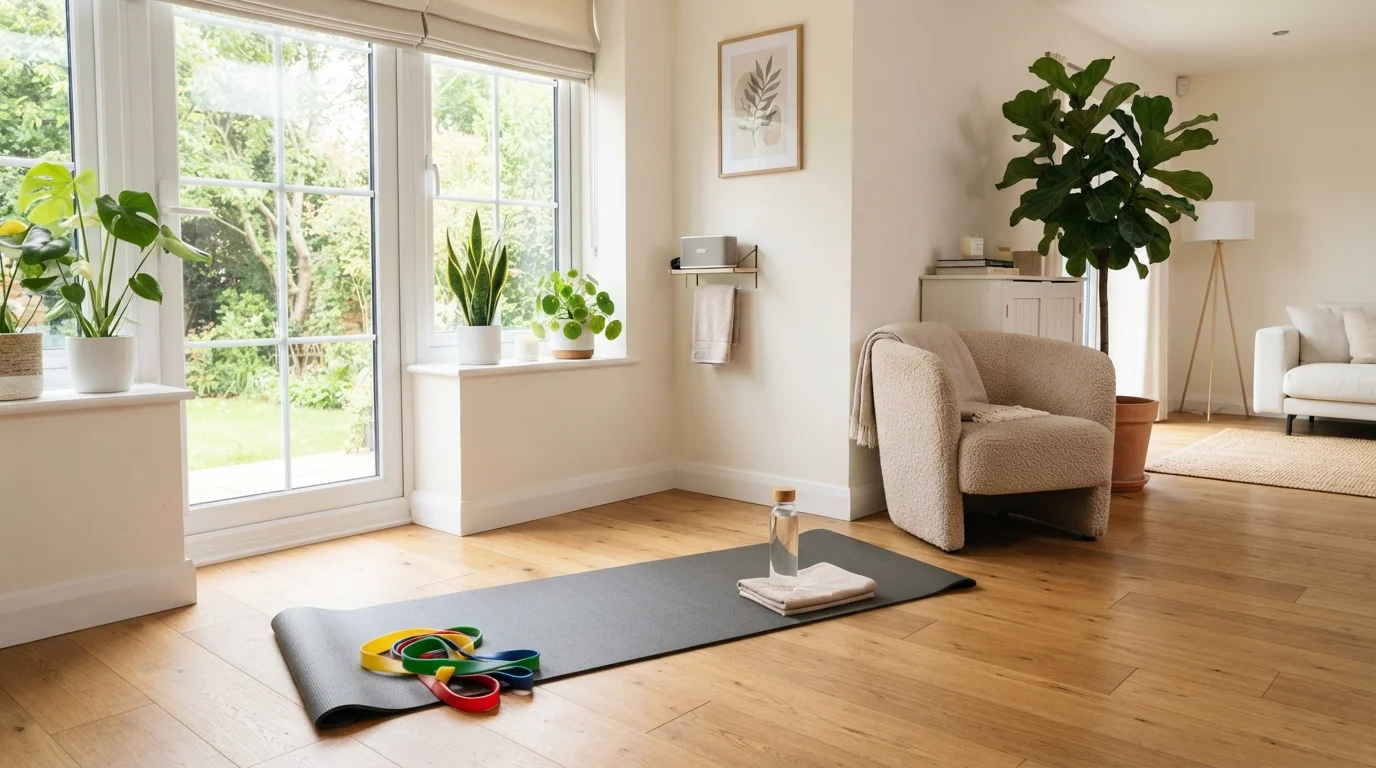
- A yoga or exercise mat: Provides cushioning for floor work and defines your workout space - genuinely useful from day one.
- Comfortable clothing and supportive footwear: Proper shoes reduce injury risk, especially for jumping or lateral movement.
- Enough floor space to extend your arms and legs: A 6×6 foot area covers the vast majority of exercises.
From there, resistance bands are widely regarded as the most cost-effective upgrade - they're lightweight, portable, and allow progressive overload for both upper and lower body training. A set of adjustable dumbbells can add meaningful variety if your budget allows, but they're not a prerequisite.
What you can likely skip at the start: pull-up bars bolted to door frames (require structural checks), stationary bikes or treadmills (high cost, large footprint), and specialty machines targeting single muscle groups. If you do eventually want to upgrade your space more broadly, thinking through home modifications carefully is a smart first step.
~$25-$50
Typical cost of a resistance band set
Resistance bands are among the most versatile and affordable strength tools available, according to fitness and consumer research.
150 min/week
Recommended moderate aerobic activity
The U.S. Department of Health and Human Services Physical Activity Guidelines for Americans recommend at least 150 minutes of moderate-intensity aerobic activity weekly for adults.
Building a Routine That Lasts
Equipment choices matter less than most people expect. What actually predicts whether you'll maintain a home workout habit is structure and consistency - not gear. A realistic schedule, even just two or three sessions per week, builds momentum far more reliably than a one-time splurge on equipment.
Before each session, a short warm-up makes a real difference in both safety and performance. Our pre-workout checklist walks through hydration, mobility, and mindset in just a few minutes. And if time is the main barrier, building a routine around a packed schedule is entirely achievable with the right approach.
This article is for general informational purposes only and does not constitute medical or fitness advice. Consult a qualified healthcare or fitness professional before starting a new exercise program, especially if you have any existing health conditions or injuries.