
Why Starting Small Actually Works
One of the most common beginner mistakes is going too hard, too fast - and burning out within two weeks. Research on behavior change consistently shows that small, manageable actions are far more likely to become lasting habits than ambitious overhauls. Exercise is no different.
You don't need a dramatic fitness transformation to get meaningful health benefits. Moving your body regularly - even in short bursts - supports cardiovascular health, mood regulation, sleep quality, and energy levels. The science is clear: some movement is dramatically better than none, and you can build from there.
Give Yourself Permission to Start Small
A 10-minute walk after dinner is a completely valid starting point. Short, consistent movement sessions build the habit foundation you'll grow from. There's no minimum threshold of effort required before your activity 'counts' - any movement is genuinely better than none.
If the idea of a full workout feels overwhelming right now, that's completely okay. A 10-minute walk after dinner counts. A few stretches in the morning counts. Give yourself permission to start where you are, not where you think you should be.
Choosing the Right Type of Movement for You
Exercise doesn't have to look a specific way. The broad categories worth knowing as a beginner are:
- Aerobic (cardio) exercise - rhythmic activity that raises your heart rate, like walking, jogging, cycling, dancing, or swimming. This supports heart and lung health.
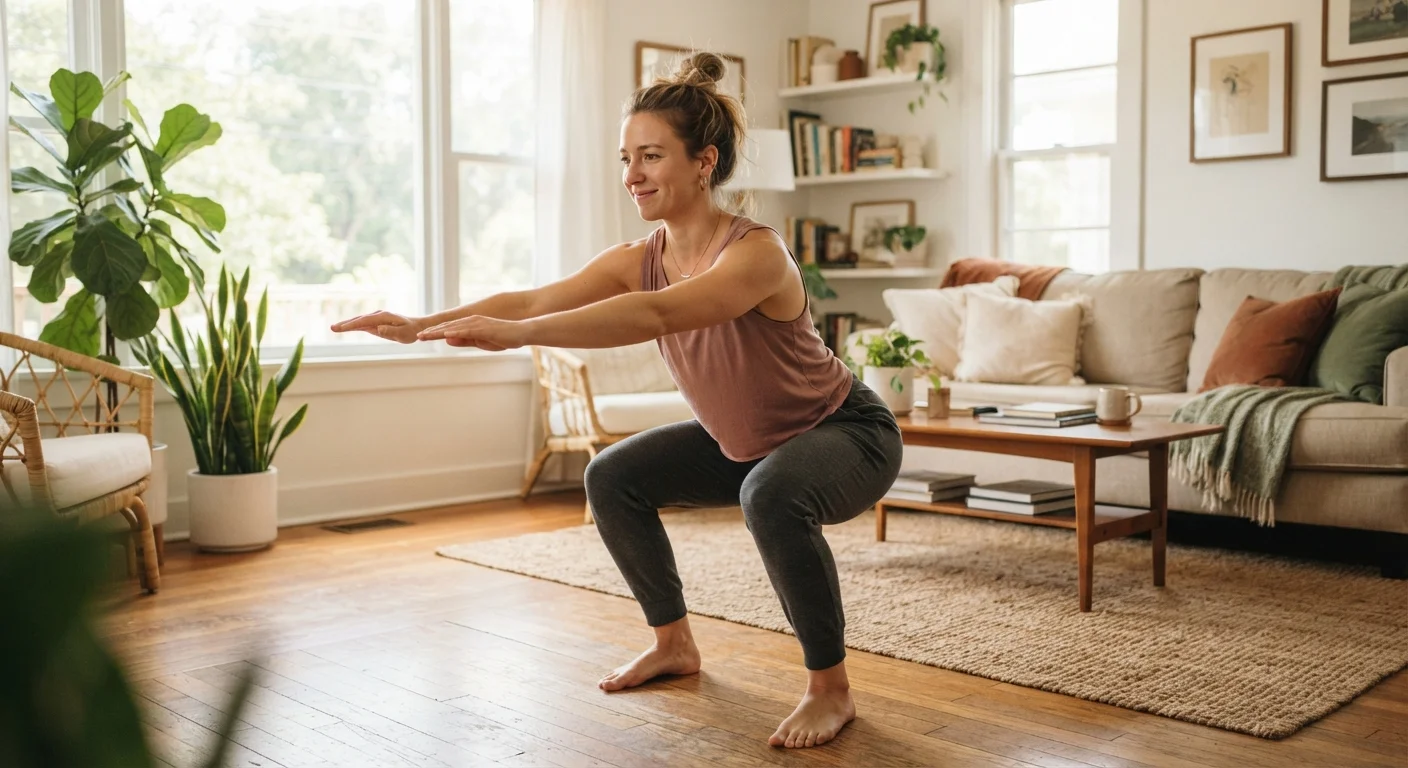
- Strength (resistance) training - movements that challenge your muscles, including bodyweight exercises like push-ups and squats, or exercises using weights or resistance bands. This helps maintain muscle mass and bone density.
- Flexibility and mobility work - stretching, yoga, or foam rolling that supports range of motion and recovery.
Most health guidelines, including those from the CDC and the American Heart Association, recommend a combination of aerobic and strength-based activity for overall wellbeing. But the most important filter when you're just starting out? Choose activities you don't dread. Enjoyment is one of the strongest predictors of exercise adherence.
Aerobic exercise
Physical activity that raises your heart rate and breathing for a sustained period, like walking, jogging, or cycling. It primarily strengthens your heart and lungs.
Resistance training
Exercise that works your muscles against a force - your own bodyweight, bands, or weights. It builds strength and supports bone health over time.
NEAT
Non-Exercise Activity Thermogenesis - the energy you burn through everyday movement that isn't formal exercise, like walking to your car, doing chores, or fidgeting.
DOMS
Delayed Onset Muscle Soreness - the muscle tenderness that typically appears 24-48 hours after an unfamiliar or intense workout. It's normal and usually fades within a few days.
Dynamic warm-up
A pre-exercise routine using controlled, moving stretches and light activity to prepare your joints and muscles without holding still positions.
Habit stacking
A behavior-change technique where you link a new habit (like exercising) to an existing routine (like morning coffee) so it happens more automatically.
Don't forget that movement outside of structured workouts also matters. Your daily steps, active commute, and household tasks all contribute - a concept known as NEAT. Learn more in our article on why movement between workouts matters.
How Much Exercise Do Beginners Actually Need?
The U.S. Department of Health and Human Services' Physical Activity Guidelines for Americans recommend that adults aim for at least 150 minutes of moderate-intensity aerobic activity per week, plus muscle-strengthening activity on two or more days. That can sound like a lot when you're starting from zero - but spread across the week, it's about 20-30 minutes most days.
If that still feels like too much right now, that's fine. Any increase in physical activity from your current baseline is beneficial. The guidelines also note that moving more and sitting less provides health benefits regardless of the total amount. Think of 150 minutes as a long-term target, not a Day 1 requirement.
Pairing your movement with smart nutrition supports your progress. Our Nutrition Basics hub offers straightforward, evidence-based guidance on fueling your body well.
Building a Habit That Sticks
Motivation is unreliable - it peaks and dips regardless of your intentions. What actually makes exercise sustainable is a system: a consistent time, a low barrier to entry, and some form of accountability.
A few strategies that behavioral research supports:
- Habit stacking: Attach your workout to an existing habit. For example, exercise right after you make your morning coffee, or immediately when you get home from work.
- Reduce friction: Lay out your workout clothes the night before. Have a short default routine ready so you're never deciding what to do in the moment.
- Track something simple: A checkmark on a calendar for each day you move is surprisingly effective for maintaining streaks.
- Start with a commitment that feels almost too easy: Two 15-minute sessions a week is a perfectly valid beginning. You can always add more once the habit is established.
If you're working out at home and wondering what setup actually helps, see our honest guide to home workout equipment.
Warming Up, Cooling Down, and Staying Safe
Skipping the warm-up is tempting when time is tight, but it meaningfully increases injury risk - especially for beginners whose joints and muscles aren't yet conditioned to exercise demands. A five-minute warm-up that gradually raises your heart rate and mobilizes key joints is enough to make a difference.
Dynamic warm-ups (controlled leg swings, arm circles, light marching in place) are generally more appropriate before exercise than static holds. Static stretching - holding a stretch for 20-30 seconds - is better suited for after a workout when your muscles are already warm. Our article on static vs. dynamic stretching breaks down exactly when to use each approach.
Before each session, it also helps to run through a quick mental checklist. The pre-workout checklist covers hydration, form reminders, and mindset - worth bookmarking as a beginner.
Know When to Check In With a Professional
If you experience chest pain, dizziness, shortness of breath out of proportion to your effort, or sharp joint pain during exercise, stop and seek medical advice before continuing. If you have a pre-existing health condition, it's worth speaking with your doctor before starting a new exercise program. This guidance applies especially to anyone who has been sedentary for a long period.
What to Do When Motivation Fades
Every person who exercises consistently has gone through periods of low motivation. This is normal, not a character flaw. A few reframes that can help:
- Lower the bar temporarily. On low-energy days, commit only to putting on your shoes and doing five minutes. Often you'll continue - and even if you don't, five minutes beats zero.
- Switch it up. Boredom is a real barrier. Trying a new activity - a dance video, a short hike, a new bodyweight routine - can re-engage your interest without requiring more time.
- Revisit your reason. Write down two or three personal reasons you want to be more active (better sleep, less stress, more energy). Return to that list when motivation dips.
It's also worth noting that exercise and mental wellbeing have a well-documented relationship. Regular movement is associated with reduced symptoms of anxiety and depression, according to research published by institutions including the National Institutes of Health. Taking care of your body is, in a real sense, taking care of your mind too.
This article provides general health and fitness information for educational purposes only. It is not a substitute for personalized advice from a qualified healthcare professional. If you have any health conditions, injuries, or concerns before beginning an exercise program, please consult your doctor or a licensed fitness professional.