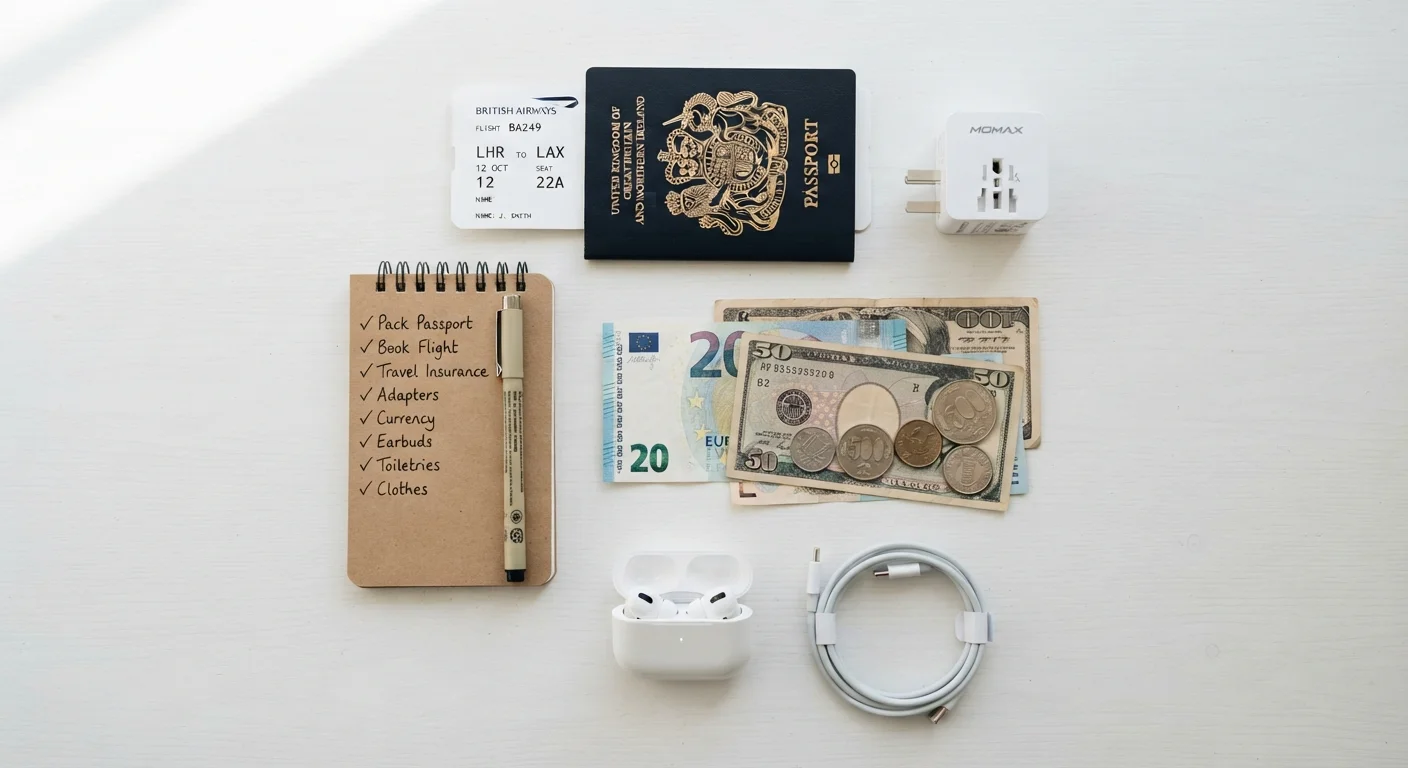
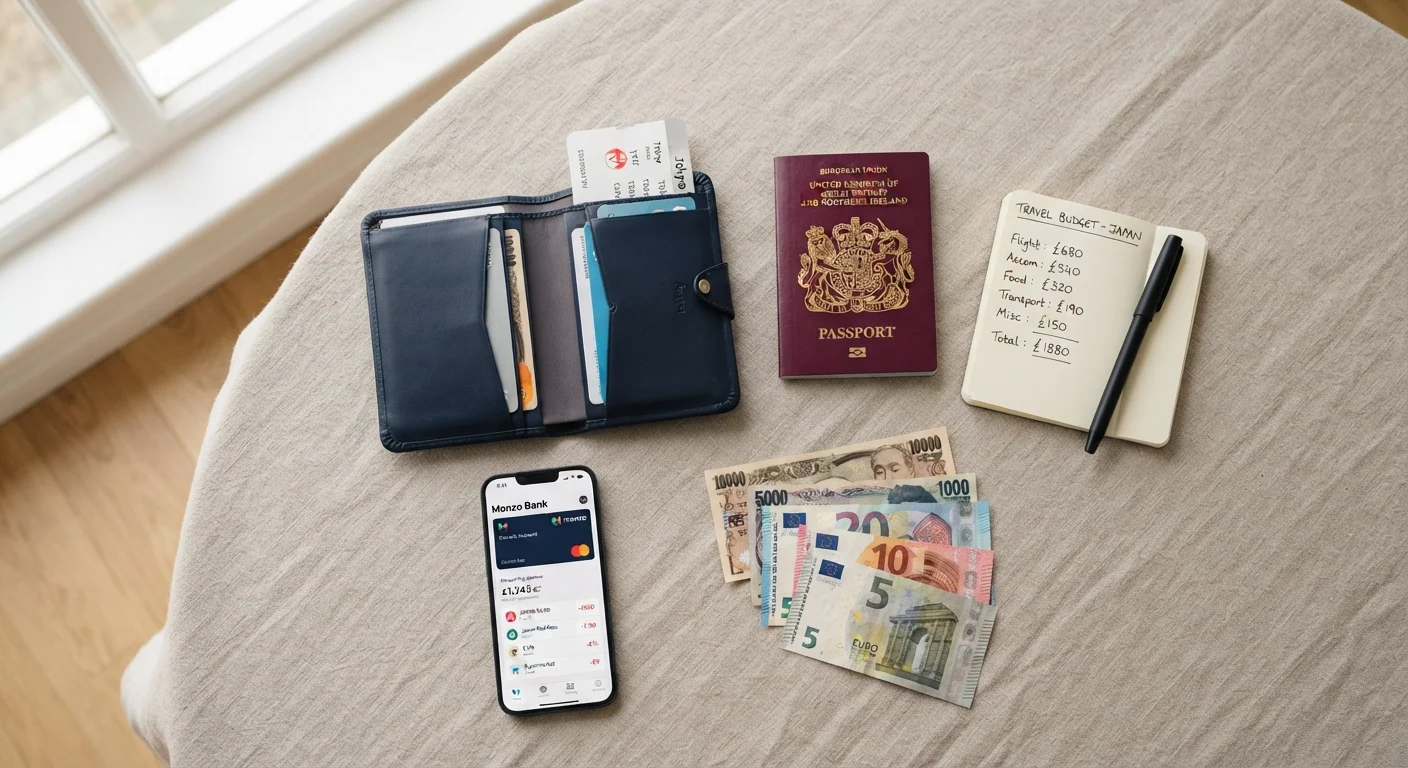
A step-by-step checklist covering documents, finances, health prep, accommodations, and logistics to verify before your departure date.
Key Takeaways
Verify passport validity and visa requirements at least 4–6 weeks before departure.
Notify your bank and carry at least two payment methods to avoid financial disruptions abroad.
Confirm all bookings, travel insurance, and emergency contact details before leaving home.
Complete any required vaccinations or health documentation well in advance of your trip.
Save digital and physical copies of every critical travel document.
Why a Pre-Departure Checklist Matters
Most travel headaches — missed connections, declined cards, expired passports — don't happen because travelers are careless. They happen because the preparation window before a trip is compressed and easy to underestimate. A systematic checklist distributes that mental load so nothing slips through.
This list is designed for any trip with an overnight stay or international component. Run through it at least one week before departure, not the night before. If you're heading overseas for the first time, pair this with our ground-up international trip planning guide for broader context on each stage.
Travel Documents
Check that your passport is valid for at least six months beyond your return date — many countries enforce this rule at the border.Must
Confirm your visa status for every country on your itinerary, including transit countries where you may have a layover.Must
Save digital copies of your passport, visa, travel insurance policy, and accommodation confirmations to cloud storage and email.Must
Print and store one physical set of critical documents separately from your carry-on bag.Should
Record your passport number, travel insurance policy number, and emergency contact for your insurer in your phone's notes.Should
Finances and Payments
Notify your bank and credit card providers of your travel dates and destinations to prevent fraud-triggered card blocks.Must
Carry at least two separate payment methods — ideally cards from different networks — in case one is declined or lost.Must
Exchange or withdraw a small amount of local currency before departure for immediate expenses like transit or tips on arrival.Should
Confirm your card's foreign transaction fee structure so you know which card to use abroad.Should
Health and Safety Prep
Consult a travel medicine clinic or your healthcare provider about recommended or required vaccinations well in advance — some require multiple doses over weeks.Must
Pack a sufficient supply of any prescription medications, with original pharmacy labeling and a doctor's note if carrying controlled substances.Must
Verify your travel insurance policy covers emergency medical care, evacuation, and trip cancellation for your specific destination.Must
Pack a basic first-aid kit with adhesive bandages, pain reliever, antidiarrheal medication, and any destination-specific items your doctor recommends.Should
Bookings and Logistics
Reconfirm all flight bookings and check in online within the window your airline allows — typically 24 hours before departure.Must
Confirm hotel, rental, or accommodation reservations and save the property's address and phone number in your phone.Must
Arrange airport transportation for both ends of the trip so you're not scrambling on arrival in an unfamiliar city.Should
Download offline maps, translation apps, and airline or transport apps before you lose reliable Wi-Fi access.Should
Review your airline's current baggage policy and weight limits to avoid surprise fees at check-in.Should
Home and Security Before You Leave
Arrange for mail collection, plant watering, or pet care so nothing deteriorates while you're away.Should
Set lights on timers and ensure windows, doors, and garage are locked before leaving for the airport.Should
Share your detailed itinerary and emergency contacts with a trusted person at home.Must
Pause or redirect any recurring deliveries scheduled during your absence.Nice to have
Register your trip with your country's official foreign travel advisory service (e.g., the U.S. State Department's STEP program) for international destinations.Nice to have
Tools That Make the Process Easier
You don't need specialized software to run this checklist — a notes app on your phone is enough. That said, a few tools consistently save travelers time and reduce friction at key checkpoints.
Required
Cloud Storage App (e.g., Google Drive or iCloud)
Store and access digital copies of passports, visas, insurance policies, and booking confirmations from anywhere.
Required
Offline Maps App
Navigate your destination without relying on cellular data, especially useful on arrival before getting a local SIM.
Optional
Translation App with Offline Language Packs
Communicate in destinations where English is not widely spoken, even without an internet connection.
Required
Universal Travel Adapter
Charge all your devices without compatibility issues across different countries' power outlet standards.
Required
Travel Insurance Policy Document
Provides proof of emergency medical, evacuation, and cancellation coverage — required at some borders and essential if you need to make a claim.
For a deeper look at the financial side of trip prep, the pre-trip financial checklist for budget travelers walks through bank notifications, foreign transaction fees, and cash strategy in detail.
A Note on Timing and Verification
Entry requirements, visa rules, vaccination mandates, and airline policies change. Always verify critical details — particularly anything related to border entry or health documentation — directly with your destination country's official government source and your airline or carrier. What was accurate when you booked your ticket may not hold at the time of travel.
Visa and Entry Rules Can Change Without Notice
Do not rely solely on travel blogs, booking platforms, or third-party aggregators for visa or entry requirement information. Always check the official immigration or foreign affairs website for your destination country and your own government's travel advisory page. Requirements for vaccinations, documentation, and even passport validity minimums can shift on short notice, and being turned away at the border is not a situation your airline or insurer can easily resolve.
For those juggling multiple trips or traveling frequently, these same principles scale. The Budget Travel Tips hub covers strategies for making this kind of prep more efficient over time.
This article is for general informational purposes only. Entry requirements, health regulations, and travel advisories vary by destination and change frequently. Always verify current requirements with official government sources, your airline, and a qualified professional where health or legal matters are involved.
Travel Smart Editorial Team is the collective byline for our editorial team and contributor network. Articles published under this byline or an editorial pen name are researched, written, and reviewed according to our editorial standards for clarity, consistency, and independence before publication.
The content provided on our blog site traverses numerous categories, offering readers valuable and practical information. Readers can use the editorial team’s research and data to gain more insights into their topics of interest. However, they are requested not to treat the articles as conclusive. The website team cannot be held responsible for differences in data or inaccuracies found across other platforms. Please also note that the site might also miss out on various schemes and offers available that the readers may find more beneficial than the ones we cover.