What Makes Morocco Worth the Trip
Few countries within a short flight of the US East Coast or Europe pack in as much geographic and cultural contrast as Morocco. Within a single week, you can move from the Atlantic surf towns of Taghazout or Essaouira to the labyrinthine medinas of Fès and Marrakech, up into Berber villages in the High Atlas, and out toward the Erg Chebbi dunes near Merzouga. That spatial variety is Morocco's strongest argument.
The country also sits at a cultural crossroads — Amazigh (Berber), Arab, and French colonial influences are all visible in language, architecture, cuisine, and daily life. For travelers who care about that kind of layered context, Morocco delivers in a way that more homogenized destinations don't.
Exceptional geographic and cultural diversity in one country
Desert, mountain, coast, and ancient city are all accessible within a single trip. Few countries at this price point offer equivalent contrast.
Relatively affordable for budget-conscious travelers
Outside tourist-facing establishments, food, local transport, and accommodation costs remain low compared to Western Europe. Negotiating riad rates in shoulder season can stretch a budget further.
Compelling culinary scene with genuine regional variation
Tagines, couscous, pastilla, and harira vary meaningfully across regions. Coastal cities like Essaouira offer fresh seafood at local prices that are difficult to match elsewhere.
Accessible from major US and European hubs
Direct and one-stop flights connect Morocco to New York, multiple European cities, and beyond. Travel time from the US East Coast is competitive with many Atlantic destinations.
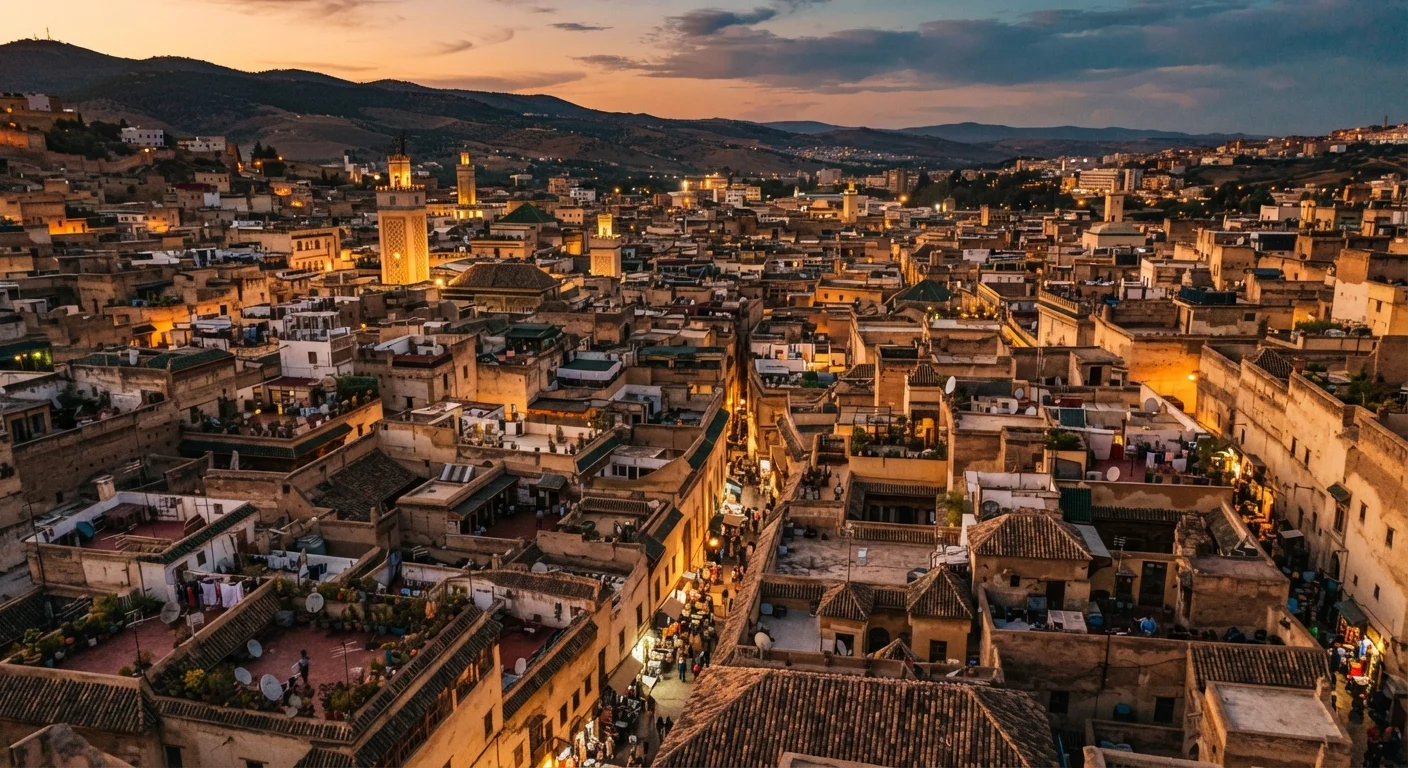
Rich architectural heritage including multiple UNESCO-listed medinas
Fès el-Bali, Marrakech's historic center, and other medinas carry genuine historical weight. The built environment rewards walkers who take time to move slowly.
Practically speaking, Morocco remains accessible for travelers on limited budgets. Street food, local buses, and guesthouse riads outside peak zones can keep daily costs well below Western European equivalents. It's also a logical pairing with a stop in Lisbon or Madrid — our Portugal region-by-region guide covers what that combination might look like.
The Honest Challenges Independent Travelers Face
Morocco's tourist medinas — particularly Marrakech's Djemaa el-Fna and the souks of Fès — operate at a pressure level that catches many first-timers off guard. Commission-based guiding, persistent touts near major landmarks, and aggressive vendor negotiation are all documented and consistent realities, not isolated incidents. This isn't a reason to skip Morocco; it is a reason to arrive knowing what to expect.
Persistent touts in major tourist areas
Commission-based guiding and vendor pressure near key landmarks in Marrakech and Fès are consistent and can feel exhausting for unprepared travelers. A direct, polite refusal strategy helps.
Navigation in medinas is genuinely difficult
Unlabeled streets and unreliable GPS make self-navigation inside ancient medinas harder than most destinations. Allowing extra time and a flexible attitude is essential.
Solo female travelers face documented harassment
Unwanted attention is a widely and consistently reported experience for women traveling alone, particularly in larger cities and at night. Preparation and route awareness are meaningful mitigants, not guarantees.
Inflated pricing in tourist-facing medina shops
Prices are rarely fixed in souks; the starting price quoted to foreign visitors often bears little relation to the transaction price locals pay. Negotiation is expected, but it requires energy and composure.
Intercity travel times are longer than maps suggest
Road conditions outside major highways and mountain terrain can significantly extend journey times. Travelers who underestimate transit time tend to over-pack itineraries and feel rushed.
Navigation inside historic medinas is genuinely difficult. Streets are unmarked, GPS often loses accuracy in narrow alleys, and even experienced travelers get turned around regularly. Building in extra time and treating getting lost as part of the experience is a more useful frame than expecting smooth point-to-point movement.
For solo female travelers, harassment — ranging from unwanted comments to persistent following — is a widely reported issue. It varies significantly by location and time of day but should not be minimized. Consulting recent traveler accounts from women in the same demographic is one of the most useful prep steps available. See our guide on separating destination hype from reality for how to source that kind of reliable signal.
Logistics, Costs, and Entry Considerations
Morocco uses the Moroccan dirham (MAD), which is not freely convertible outside the country — plan to exchange on arrival or use ATMs in-country. Tipping is standard and expected in restaurants, riads, and after guided interactions; factor it into your daily budget estimate.
13M+
International tourist arrivals annually
Morocco's Ministry of Tourism has reported figures in this range in recent pre-pandemic and post-recovery years, reflecting its status as Africa's most visited country.
9
UNESCO World Heritage Sites
Morocco holds nine UNESCO-designated sites, including the medinas of Fès, Marrakech, Meknès, and Tétouan, giving independent travelers substantial cultural infrastructure to explore.
Ground transportation between cities is reliable and inexpensive. CTM and Supratours are the main intercity bus operators; train service connects Casablanca, Rabat, Fès, and Marrakech efficiently. Shared taxis (grand taxis) fill regional gaps but require more flexibility.
Entry requirements, visa rules, and any current health or safety advisories must be verified directly with the US State Department and Moroccan consular sources before travel — conditions change and no article can substitute for that check. Our pre-departure verification checklist walks through each category systematically.
Always Verify Entry and Safety Requirements
Visa policy, vaccination requirements, and travel advisories for Morocco can change without broad media coverage. Check the US State Department's Morocco country page and the CDC's traveler health notices before finalizing travel dates. No destination guide — including this one — can substitute for that official check.
If you're building out your itinerary, the anatomy of a good travel itinerary is useful for structuring realistic Morocco plans, which often underestimate travel time between regions.