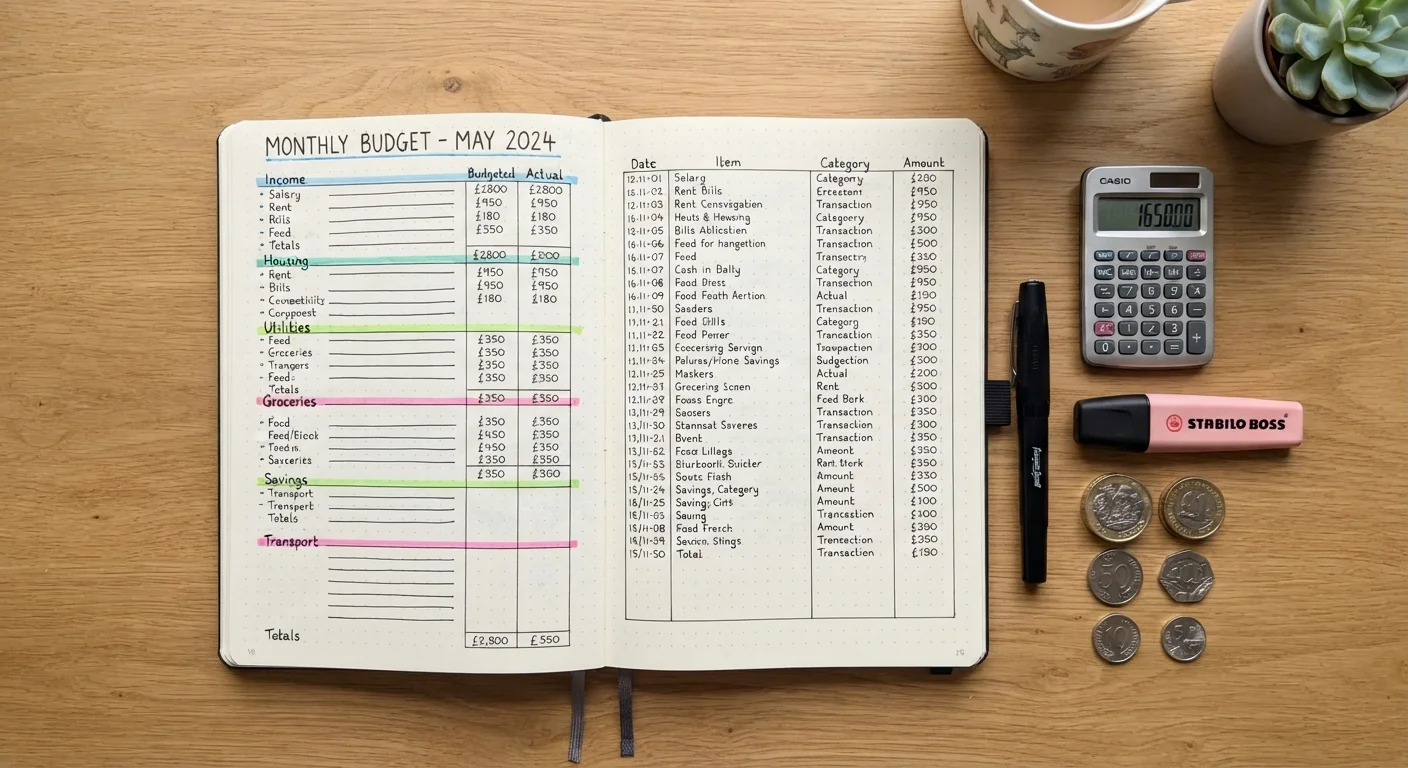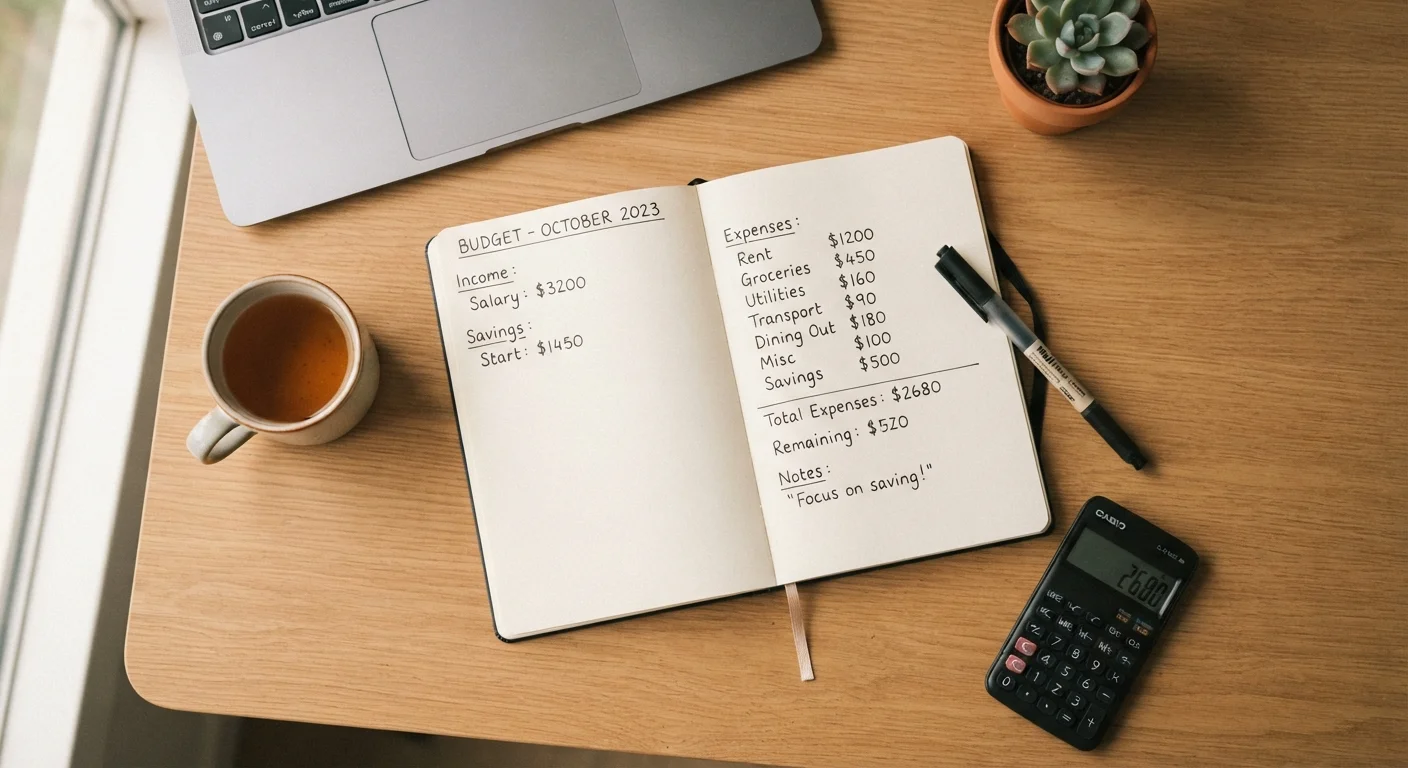

Why Budgeting Matters — Even Before You Feel You Need It
Most people encounter their first paycheck and assume budgeting is something to worry about later — once there's more money, more stability, or more complexity. In practice, the earlier you build the habit, the less corrective work you'll need to do down the road.
A budget is not a restriction. It's a description of your priorities written in numbers. Without one, spending decisions happen by default rather than by design. With one, even a basic one, you're making active choices rather than wondering where the money went.
Unfamiliarity with financial terminology can make this feel intimidating. If terms like net income, fixed vs. variable expenses, or emergency fund aren't familiar yet, the Personal Finance Terms Every New Earner Should Know is a plain-language starting point worth bookmarking.
~33%
Americans with a written monthly budget
Surveys conducted by the National Foundation for Credit Counseling have consistently found that fewer than one in three U.S. adults maintain a detailed monthly budget.
$1,000
Starter emergency fund target cited by financial educators
Many financial literacy programs recommend a $500–$1,000 emergency buffer as the first savings milestone before aggressively targeting debt.
3–6 months
Recommended full emergency fund coverage
The Consumer Financial Protection Bureau (CFPB) cites three to six months of essential living expenses as a commonly recommended emergency fund target.
Getting Started: Know Your Numbers
Before picking any budgeting system, you need two foundational data points: what comes in and what goes out.
Your Take-Home Pay
Start with your net income — the amount deposited into your account after taxes and any deductions (like health insurance or a retirement contribution). This is your real working number, not your salary figure. If your income varies month to month, calculate a conservative average using your three most recent paychecks.
Your Actual Expenses
Pull your last two to three months of bank and credit card statements and categorize every transaction. Split them into two groups:
- Fixed expenses: amounts that stay the same each month — rent, loan payments, subscriptions.
- Variable expenses: amounts that fluctuate — groceries, dining, transportation, entertainment.
Most people are surprised by what they find. This step isn't about judgment — it's about accuracy. Your first monthly budget guide walks through this categorization process in more detail if you want a structured walkthrough.
Don't try to categorize spending from memory — pull actual statements. Even seasoned budgeters consistently underestimate variable spending by 20–30% when estimating without data.
Real transaction data removes guesswork and reveals patterns that feel counterintuitive until you see them on paper, making your initial budget far more accurate.
If your income is irregular, build your budget around your lowest recent paycheck rather than your average. Any extra income that month becomes a bonus you can allocate intentionally.
Planning conservatively prevents shortfalls and builds a habit of treating windfalls as deliberate choices rather than spending opportunities.
Choosing a Budgeting Method
Once you know your income and spending patterns, you can choose a framework that fits your life. There's no universally correct method — the best budget is the one you'll actually maintain.
Common Approaches
- 50/30/20 Rule
- Allocate 50% of take-home pay to needs, 30% to wants, and 20% to savings and debt repayment. Simple and flexible, but the percentages may need adjustment based on your cost of living.
- Zero-Based Budgeting
- Assign every dollar of income a specific job until your budget reaches zero. Requires more tracking but gives maximum control over each spending category.
- Pay Yourself First
- Automatically transfer a set amount to savings or investments the moment you're paid, then budget the remainder. Prioritizes long-term goals from the start.
A detailed, side-by-side comparison of these and other frameworks — including envelope budgeting — is available in the budgeting methods comparison guide.
Start Simple, Then Refine
If you're brand new to budgeting, don't try to track 15 spending categories in month one. Begin with five broad buckets — housing, food, transportation, savings, and everything else — and add granularity as the habit becomes routine. A budget you actually maintain beats a perfect one you abandon.
Building Savings and Tackling Debt Alongside Your Budget
A budget doesn't exist in isolation. For most people, it needs to do two things simultaneously: build a financial cushion and reduce debt. These goals feel like they're in tension, but a structured approach makes both possible.
A general starting point many financial educators recommend is building a small emergency fund — often cited as $500 to $1,000 — before aggressively paying down non-emergency debt. This buffer prevents a surprise expense from sending you deeper into debt while you're trying to get out of it.
After that starter cushion, the priority order depends on interest rates. High-interest debt (such as credit card balances) typically costs more than any savings account can return, so focusing extra payments there usually makes mathematical sense. Lower-interest debt can be managed at minimum payments while savings grow alongside it.
For a comprehensive walkthrough of both goals together, the saving and debt repayment roadmap covers the sequencing in full detail.
Don't Ignore High-Interest Debt
Carrying high-interest debt (such as credit card balances with APRs above 20%) while only saving in a low-yield account may cost you significantly more over time than the savings earn. This doesn't mean saving is wrong — it means understanding the math of your interest rates matters. No specific strategy is right for everyone; consider speaking with a nonprofit credit counselor if you're unsure how to prioritize.
Reviewing, Adjusting, and Staying on Track
A budget written once and never revisited is only marginally more useful than no budget at all. Life changes — income shifts, rent increases, subscriptions accumulate — and your budget needs to reflect reality to stay useful.
Build a Monthly Check-In Habit
Set aside 15–20 minutes at the end of each month to compare what you planned against what actually happened. Ask three questions:
- Which categories went over, and why?
- Which categories had leftover funds — should those be redirected?
- Did any new expenses appear that need their own category?
This isn't about guilt — it's about learning your patterns so you can plan more accurately next time. For the principles that support budgets over years rather than just months, budgeting principles that hold up over time is a worthwhile read once the basics feel solid.
Your Budget Will Change — That's Normal
A budget that worked at 22 will likely need significant revision by 25, and again by 30. Major life events — a new job, moving cities, a relationship change — each shift the numbers. Treat your budget as a living document, not a one-time exercise. Reviewing it at least annually, and after any major financial change, keeps it useful.
From Budget Basics to Long-Term Financial Goals
Budgeting is where financial literacy begins, but it's not where it ends. Once your monthly cash flow is stable and predictable, you have the foundation to pursue larger goals: a travel fund, a home down payment, or investing for retirement.
For goal-specific planning — like saving for a trip — the same budgeting logic applies in a targeted way. The travel budget guide demonstrates how to adapt core budgeting skills to a specific savings goal.
When you're ready to think beyond savings accounts, the Investing Essentials hub provides foundational concepts for putting saved money to work — including what risk means, how accounts differ, and how to start without needing a large sum.
The progression looks like this: understand your money → plan your spending → build savings and reduce debt → invest for growth. Each stage builds directly on the last. Starting with a basic monthly budget isn't a small thing — it's the first step in a coherent, long-term financial strategy.
This article is for general informational and educational purposes only and does not constitute personalized financial, tax, or investment advice. Consult a qualified financial professional for guidance specific to your situation.