
Why Budgeting Myths Are So Sticky
Most money myths aren't invented from nothing — they grow from half-truths, outdated advice, or experiences that felt real in the moment. When someone tries a strict budget and quits in frustration, the lesson they take away isn't "that method didn't fit me." It's often "budgeting doesn't work for me." That's a big difference.
The result is that millions of people opt out of one of the most reliably useful financial habits available to them — not because they've thought it through, but because a myth got there first. This article works through the most common ones so you can decide for yourself what's worth keeping and what's worth letting go.
If you're ready to move past the myths and into practice, our plain-English guide to your first monthly budget is a practical next step.
Myth
I don't earn enough to need a budget.
Fact
Budgeting matters most when money is tight — it's a tool for making the most of what you have, not just managing excess.
The idea that budgeting is for people who already have money to spare gets the logic backwards. When income is limited, every dollar carries more weight. A budget helps you see exactly where that money is going — and whether it's going where you actually want it to. Even a rough spending map can reveal small leaks that, plugged consistently, add up over months. You don't need a surplus to benefit from awareness.
Myth
Budgets are too restrictive — they mean giving up everything I enjoy.
Fact
A well-designed budget includes spending on things you value, not just essentials.
Budgets often get a reputation for austerity because rigid, all-or-nothing approaches get the most attention. But a budget is just a plan — and plans can include takeout, streaming subscriptions, or whatever matters to you. The goal is intentionality, not deprivation. When discretionary spending is planned rather than accidental, it tends to produce less guilt and more satisfaction. It's the unplanned spending that tends to derail people, not the deliberate kind. See also: the honest trade-offs of strict budgeting for a balanced look at where tighter approaches help — and where they backfire.
Myth
You need a spreadsheet or special app to budget properly.
Fact
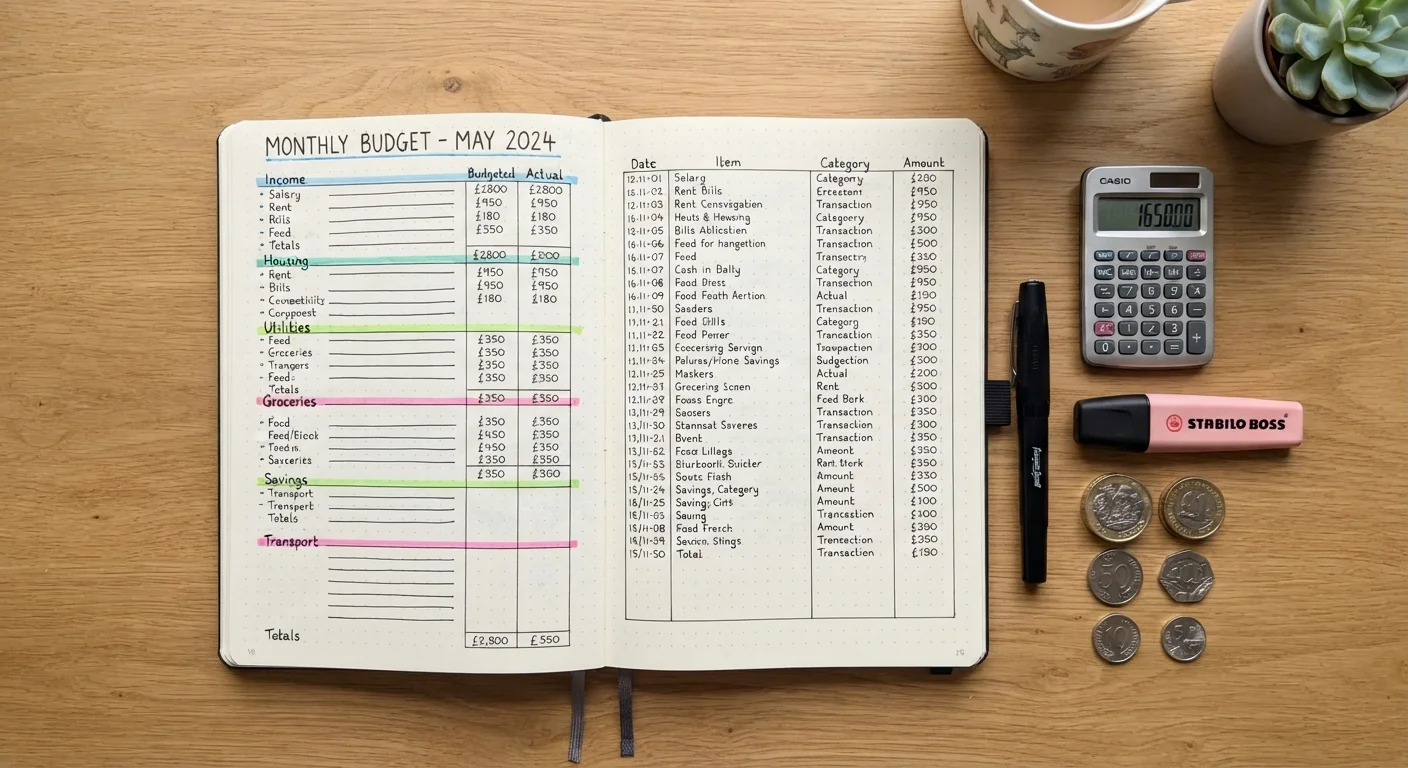
A pen and paper works fine — the tool matters far less than the habit.
The personal finance industry has a natural incentive to make budgeting seem technical. In reality, the most important step is simply recording your income and expenses in any format you'll actually revisit. Some people track everything digitally; others write three numbers on a sticky note. What predicts success isn't the sophistication of the system — it's consistency. Start with the simplest method that gives you a clear picture, then add complexity only if you genuinely need it.
Myth
If my income is irregular, budgeting is basically impossible.
Fact
Irregular earners can budget effectively using income floors, flexible spending tiers, and rolling averages.
Budgeting frameworks designed around a fixed monthly paycheck don't translate neatly to freelance or gig work — that part is true. But the solution isn't to abandon budgeting; it's to use a different model. Approaches like averaging your lowest recent months to set a conservative income baseline, or categorizing expenses into "fixed," "flexible," and "discretionary" tiers, give irregular earners a usable structure even when the exact numbers shift. Budgeting on an irregular income covers these frameworks in detail.
Myth
A budget only works if you stick to it perfectly.
Fact
Imperfect budgets still produce better outcomes than no budget at all.
Perfectionism is one of the most common reasons budgets fail in the second month. One overspent category becomes evidence that the whole system has collapsed, and people give up entirely. Research on behavior change consistently shows that progress — not perfection — drives lasting habits. A budget you follow loosely and adjust regularly is dramatically more useful than one you abandon after a single bad week. Why budgets fail in the second month explores what actually keeps people on track long-term.
What Budgeting Actually Requires
Once the myths are out of the way, the real picture is more manageable than most people expect. Budgeting at its core means knowing what comes in, knowing what goes out, and making a deliberate decision about the difference — even if that difference is zero or negative right now.
~1 in 3
US adults with a detailed household budget
Surveys consistently find that a minority of Americans actively track spending in a structured way, despite widespread acknowledgment that budgeting is beneficial.
1 week
Time needed to spot meaningful spending patterns
Financial educators commonly note that tracking all transactions for just seven days is enough to reveal recurring habits and overlooked expenses.
There's no single correct method. The 50/30/20 rule, zero-based budgeting, and pay-yourself-first each suit different lifestyles and income patterns. What matters is picking a structure you'll actually use, not the one that looks best on paper.
Don't Mistake Complexity for Effectiveness
A highly detailed budget with dozens of categories can feel productive while actually becoming a barrier to consistency. If your tracking system takes more than a few minutes per week to maintain, it's likely too complex to sustain. Start simple — you can always add more structure once the basic habit is established.
If your income varies month to month, that's a real challenge — but not a dealbreaker. The guide to budgeting on an irregular income outlines how freelancers and gig workers build workable systems around unpredictable paychecks.
This article is for general informational and educational purposes only. It is not personalized financial advice. For guidance specific to your situation, consider speaking with a qualified financial professional.