
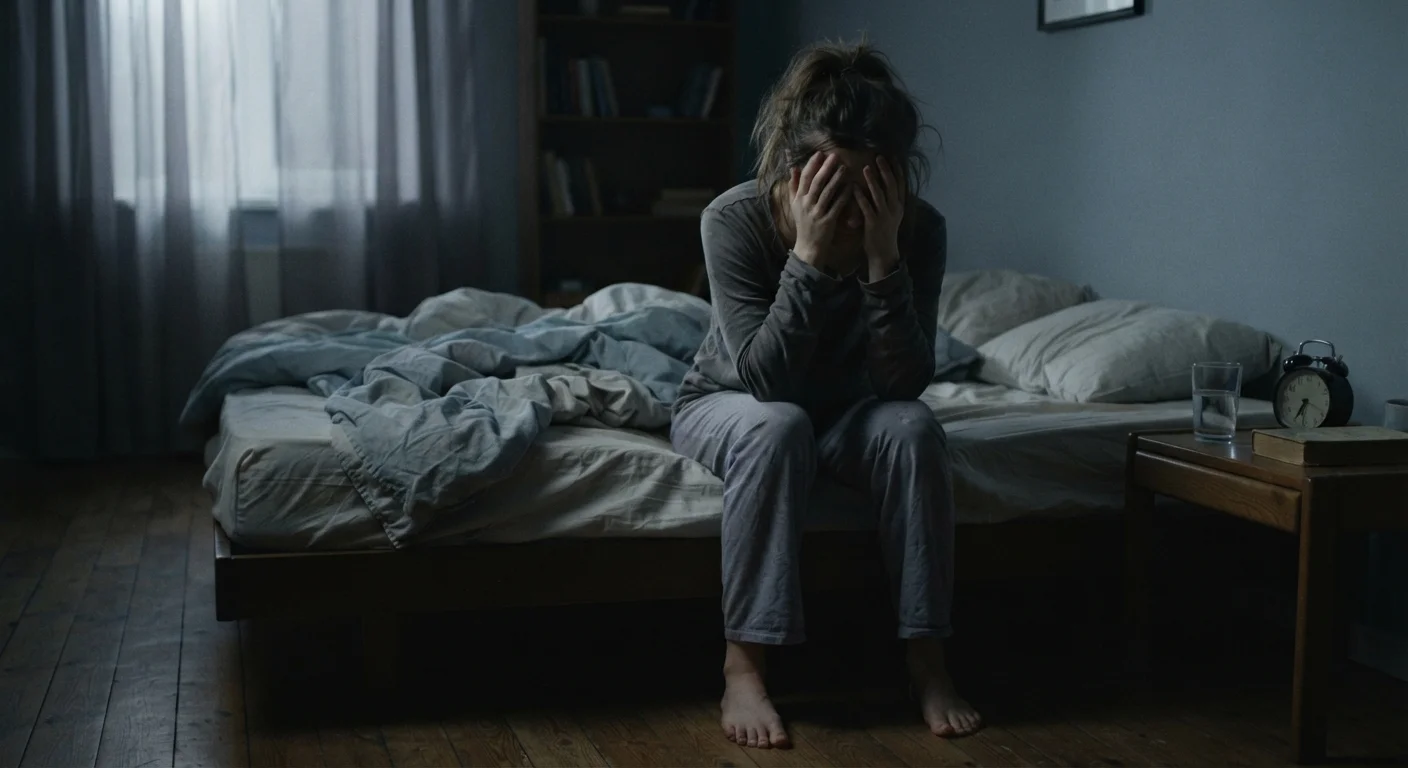
Your Brain's Emotional Alarm System Goes on High Alert
When you're short on sleep, your brain doesn't wind down gracefully - it shifts into a heightened state of emotional sensitivity. The amygdala, the structure deep in your brain that flags potential threats, becomes significantly more reactive. At the same time, the prefrontal cortex - responsible for rational thought and emotional braking - loses some of its ability to keep that alarm system in check.
The result is a brain that fires faster and harder at emotional triggers, while having fewer resources to pause and reassess. Small frustrations feel bigger. Neutral facial expressions read as hostile. A minor inconvenience can feel genuinely overwhelming. This is not an overreaction - it's your brain operating with a key circuit partially offline.
Mood Changes Are an Early Warning Signal
Many people dismiss irritability or low mood as stress or personality-related, without connecting it to recent sleep patterns. Checking in on your sleep in the past few nights when you notice a mood shift can be a useful first step. It's a simple, cost-free form of self-awareness with real diagnostic value.
Importantly, this happens before most people notice the classic physical symptoms of sleep loss like slowed reflexes or difficulty concentrating. Mood is often the earliest and most telling signal that your sleep debt is building.
The Negativity Bias Gets Louder
Sleep deprivation doesn't affect all emotions equally - it tends to amplify negative ones while dulling positive responses. Studies using brain imaging have shown that sleep-deprived participants respond more strongly to distressing images and less strongly to rewarding ones, compared to well-rested individuals.
This shift in emotional weighting has real consequences. When your brain is biased toward threat and loss, decision-making suffers. You're more likely to catastrophize, avoid, or react impulsively rather than weighing options clearly. Social interactions can feel more draining, and empathy for others may genuinely decrease - something that can strain relationships over time.
“Sleep is not a luxury. It's a biological necessity - and the emotional brain pays the price first when that necessity goes unmet.”
— Matthew Walker, Professor of Neuroscience and Psychology, author of research on sleep and the brain
Chronic Sleep Loss and the Mental Health Connection
Occasional poor sleep is a near-universal human experience. But when poor sleep becomes a pattern, the mental health risks compound. Research consistently links chronic sleep deprivation to elevated rates of anxiety disorders and depression. Importantly, the relationship works in both directions: mental health struggles can disrupt sleep, and disrupted sleep worsens mental health - a cycle that can be difficult to break without addressing both sides.
~1 in 3
US adults not getting enough sleep
The CDC reports that roughly one in three American adults regularly get less than the recommended seven hours of sleep per night.
60%
Increase in amygdala reactivity after sleep loss
Neuroimaging research, including work from the University of California, Berkeley, found amygdala responses were significantly amplified in sleep-deprived individuals compared to rested controls.
2x
Greater likelihood of anxiety with chronic poor sleep
A review published in Sleep Medicine Reviews found that individuals with insomnia are approximately twice as likely to develop an anxiety disorder compared to those who sleep well.
This bidirectional relationship means that sleep isn't just a side issue in mental wellness - it's central to it. Many clinicians now consider sleep quality when assessing and supporting mental health, recognizing it as a modifiable factor that can meaningfully shift outcomes.
This article is for informational purposes only and is not a substitute for professional medical or mental health advice. If you're experiencing persistent mood changes, sleep difficulties, or mental health concerns, please speak with a qualified healthcare provider.
Small Sleep Shifts, Real Mood Gains
The encouraging flip side of all this is that sleep improvements - even modest ones - tend to produce noticeable mood benefits relatively quickly. Prioritizing sleep doesn't require a complete lifestyle overhaul. Evidence-supported habits include keeping consistent wake times even on weekends, stepping outside for natural light in the morning to reinforce your circadian rhythm, and creating a wind-down buffer before bed that limits screens and stimulating content.
Start With a Consistent Wake Time
If you can only change one thing, sleep researchers often point to a consistent wake time as the single most powerful anchor for your sleep-wake cycle. Getting up at the same time each day - even after a poor night - helps regulate your body's internal clock and can improve sleep quality over time. Small, sustainable adjustments matter more than perfection.
If you notice your mood dipping after a run of short nights, naming it as a likely sleep effect can itself be grounding. It shifts the narrative from "something is wrong with me" to "my brain is responding predictably to an unmet need." That kind of self-awareness - treating mood changes with curiosity rather than judgment - is a meaningful part of emotional wellbeing in its own right.