
Why the Confusion Exists - and Why It Matters
The words meditation and mindfulness appear together so often that they've blurred into a single concept in popular wellness culture. Untangling them isn't just semantics - knowing the difference helps you choose a practice that actually fits your life, and it helps you set realistic expectations for what each one can do.
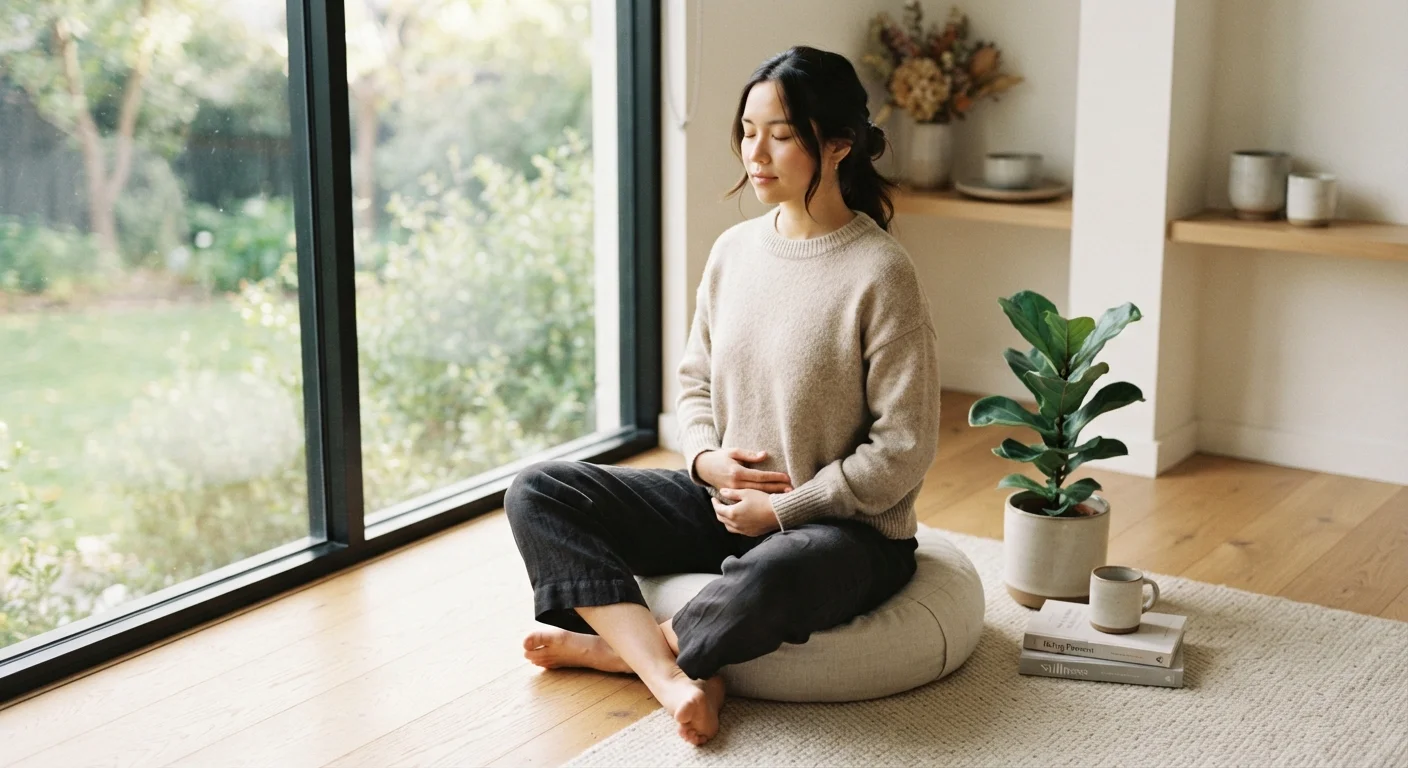
Mindfulness, in its broadest psychological definition, is a quality of attention: the ability to be fully present and aware of what's happening - internally and externally - without automatically judging or reacting. Meditation, on the other hand, is a formal practice: a deliberate activity with a set start and finish, a specific technique, and an intentional object of focus (breath, body sensations, sound, or imagery).
Think of it this way: mindfulness is an attribute you can carry into any moment, while meditation is one of the most reliable methods for strengthening it. That relationship is important, not interchangeable. See our guide to building consistent mental wellbeing habits for more on why the framing of a practice shapes how well it sticks.
| Criterion | Meditation | Mindfulness |
|---|---|---|
| What it is | A formal, structured practice | A quality of present-moment awareness |
| Requires scheduled time | Yes - set aside intentionally | No - can be embedded in daily activity |
| Technique involved | Yes - breath focus, body scan, etc. | Not necessarily - it's an attitude |
| Where it happens | Designated quiet setting (typically) | Anywhere - commute, meals, work |
| Primary goal | Train attention and regulation | Stay present and reduce reactivity |
| Evidence base | Strong for stress, focus, emotion regulation | Strong for stress reduction, well-being |
| Beginner accessibility | Moderate - technique helps with direction | High - can start with any daily moment |
What the Research Actually Says
Both practices have meaningful bodies of evidence behind them, though the strength of that evidence varies by outcome and study design - worth keeping in mind as you read wellness headlines.
~30%
Reduction in anxiety symptoms
A meta-analysis in JAMA Internal Medicine found mindfulness meditation programs associated with roughly a 30% improvement in anxiety measures among participants.
8 weeks
Typical MBSR program length
The standard Mindfulness-Based Stress Reduction program, developed at UMass Medical School, runs eight weeks and integrates both formal meditation and informal mindfulness.
10-20 min
Common effective session length
Research on focused-attention meditation suggests sessions as short as 10-20 minutes can yield measurable improvements in sustained attention when practiced consistently.
A widely cited area of research involves Mindfulness-Based Stress Reduction (MBSR), an eight-week structured program developed at the University of Massachusetts Medical School that combines both formal meditation sessions and informal mindfulness practice. Systematic reviews, including work published in journals such as JAMA Internal Medicine, have found MBSR associated with moderate reductions in anxiety, depression, and pain-related distress. Importantly, MBSR is a combined protocol - it demonstrates that formal meditation and applied mindfulness work together, not separately.
For meditation specifically, neuroimaging research has identified structural and functional differences in the brains of long-term meditators, particularly in regions associated with attention regulation and emotional processing. However, most of this research involves experienced practitioners, so it's premature to assume beginners will see the same effects quickly.
For mindfulness as a standalone skill, experimental studies suggest that brief mindfulness exercises can reduce mind-wandering and improve working memory. Research from the American Psychological Association notes that even short mindfulness-based interventions show promise for stress reduction - though larger, more rigorous trials are still needed.
The bottom line: both practices are supported by credible evidence, neither is a cure-all, and both are best understood as complements to - not replacements for - professional care when it's needed. If you're exploring how different kinds of support compare, our overview of therapy, counseling, and coaching can help clarify what each offers.
How to Choose - Or Use Both
The honest answer is that most people benefit from combining both - but starting with a clear distinction prevents the common trap of doing neither consistently while thinking you're doing both.
Start with meditation if: you want a concrete, learnable skill; you respond well to scheduled habits; or you want a structured entry point into a broader mindfulness practice. Common beginner-friendly forms include focused-attention meditation (following the breath), body scan meditation, and loving-kindness meditation.
Lean into mindfulness practice if: your schedule is genuinely unpredictable; you want to reduce reactivity in real-time situations; or you already meditate but want to extend the benefits beyond your sessions. Informal mindfulness can look like deliberate attention during a single meal, one slow breath before a stressful meeting, or a brief check-in with your physical sensations during a walk.
Neither requires an app, a cushion, or an extended time commitment to begin. A five-minute seated breath-focus exercise counts as meditation. Noticing the temperature of your coffee before your first sip counts as mindfulness. The goal isn't perfection or performance - it's repetition over time.
This article is for general informational and educational purposes only and is not a substitute for professional mental health advice, diagnosis, or treatment. If you are experiencing significant mental health concerns, please consult a qualified healthcare or mental health professional.