What Each Method Actually Does
Both zero-based budgeting and the envelope method share a core idea: spend intentionally, not impulsively. But they achieve that goal in very different ways.
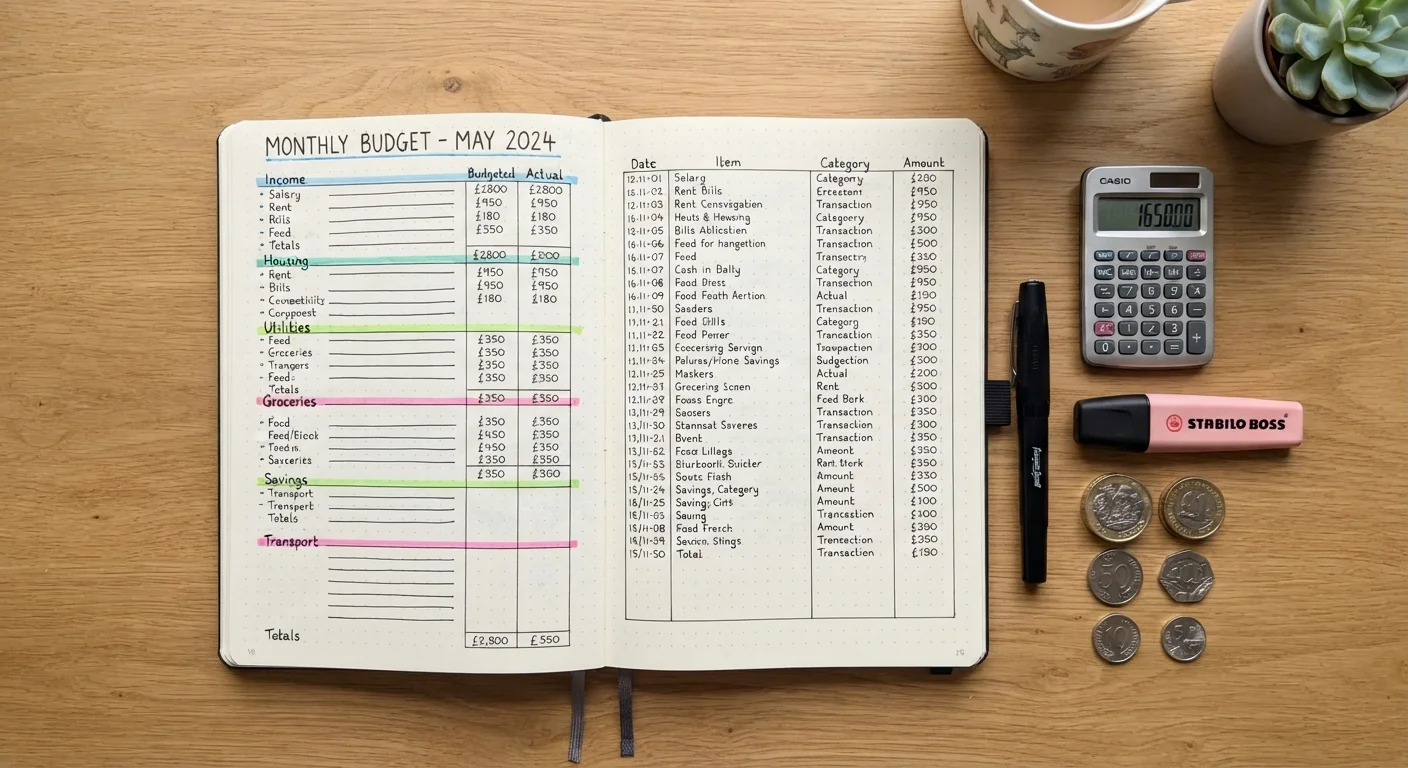
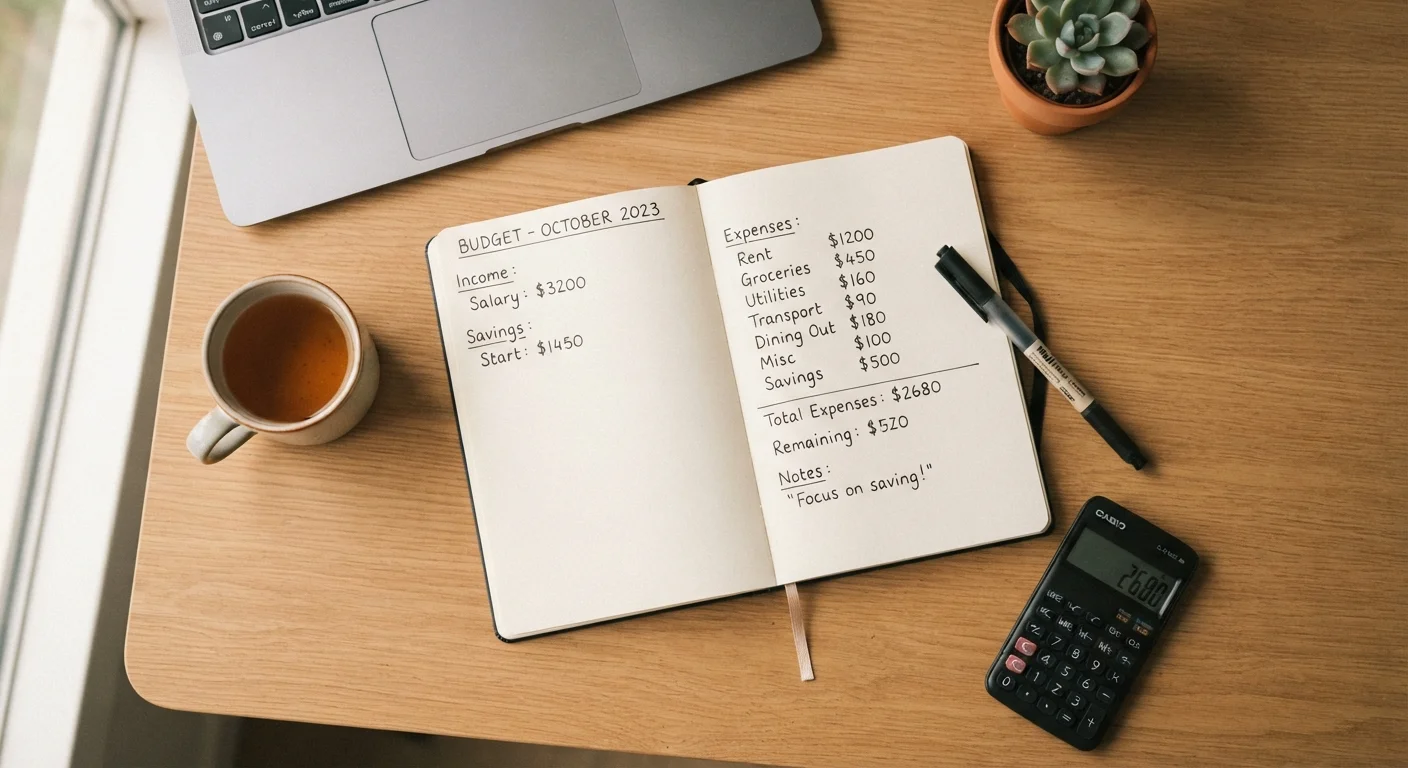
Zero-based budgeting asks you to start each month with your total expected income and assign every single dollar to a category — rent, groceries, savings, debt payments, subscriptions — until you reach zero. "Zero" doesn't mean spending everything; it means every dollar has a named purpose, including savings and investments. If you earn $3,200 in a month, your budget categories should add up to exactly $3,200.
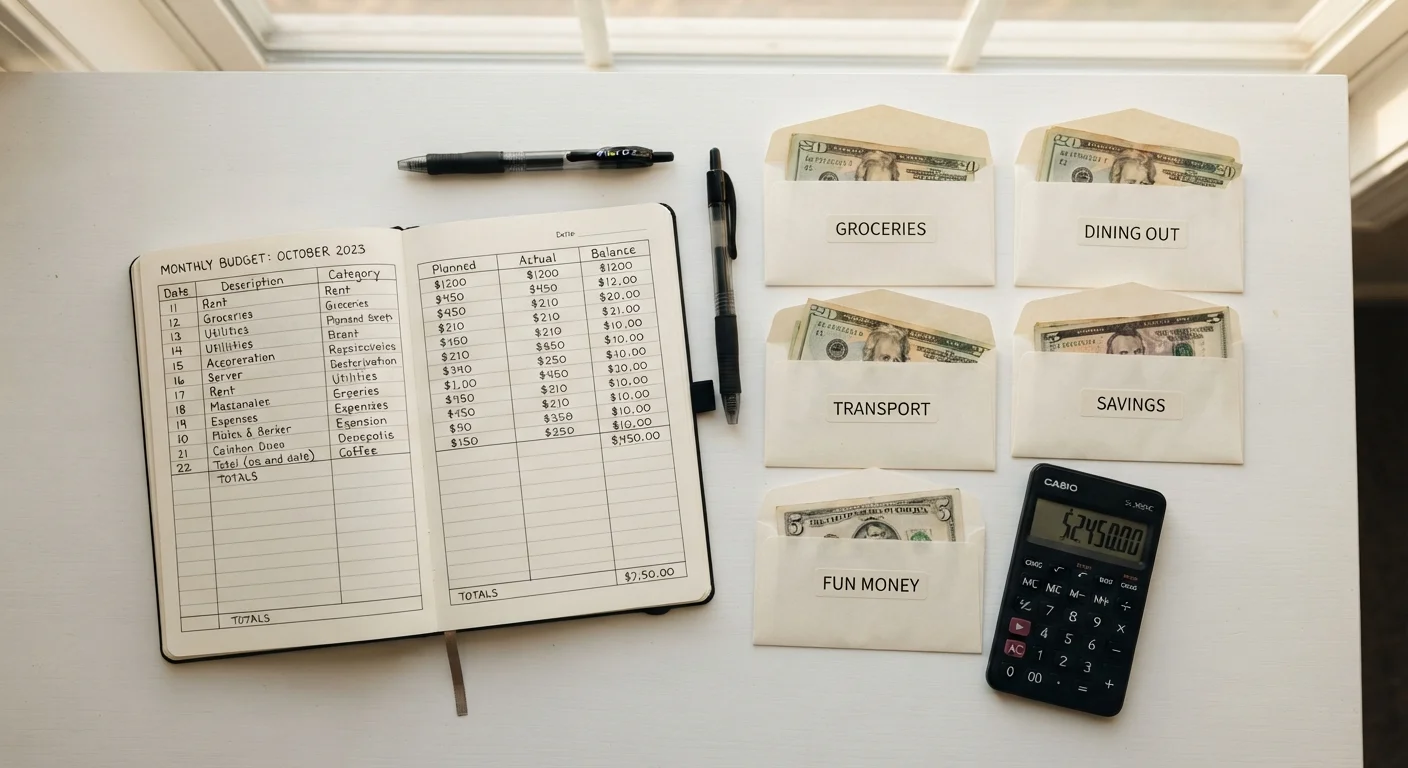
The envelope method is more tactile. You withdraw cash at the start of the month, divide it into physical envelopes labeled by spending category, and spend only the cash inside each envelope. Once an envelope is empty, spending in that category stops until next month. Originally popularized as a cash-management strategy, it works best for variable, discretionary spending categories like groceries, dining, and entertainment.
For a broader look at how these compare to other approaches, see our overview of popular budgeting frameworks.
Head-to-Head: Key Differences at a Glance
Before going deeper, it helps to see the two methods side by side across the dimensions that matter most to beginners.
| Criterion | Zero-Based Budgeting | The Envelope Method |
|---|---|---|
| Core mechanism | Assign every dollar a category | Divide cash into labeled envelopes |
| Format | Digital or spreadsheet | Physical cash |
| Covers fixed expenses? | Yes, fully | Partially — best for variable spending |
| Setup time | Moderate (30–60 min/month) | Low (cash withdrawal and sorting) |
| Works with online payments? | Yes | Limited |
| Best for overspending control? | Good — requires tracking discipline | Strong — hard cash limit enforces stop |
| Handles irregular income? | Yes — rebuilt each month | Less flexible |
One important nuance: the envelope method does not naturally account for fixed expenses like rent or utilities, which are typically paid digitally. Most people who use it apply envelopes only to variable spending categories, then handle fixed bills separately. Zero-based budgeting covers both.
Where Each Method Shines — and Where It Struggles
Zero-based budgeting excels when your financial life has many moving parts — multiple income streams, irregular expenses, or savings goals you want to track precisely. Because you rebuild the budget from scratch each month, it adapts well to changing circumstances. The downside is the time commitment: it can take 30–60 minutes each month to set up properly, and it requires consistent mid-month check-ins to stay accurate.
The envelope method delivers immediate behavioral impact. Because handing over physical cash feels more real than swiping a card, research in behavioral economics consistently suggests people tend to spend less when using cash. The limitation is practicality — online purchases, auto-payments, and peer-to-peer payments don't fit neatly into a cash envelope.
~33%
Adults without a formal monthly budget
Surveys by the National Foundation for Credit Counseling have found that roughly one-third of American adults do not maintain a detailed monthly budget.
Less
Typical spending when using cash vs. cards
Behavioral research, including studies published in the Journal of Consumer Research, suggests people generally spend less when paying with physical cash compared to credit or debit cards.
If you've never built a budget before, our plain-English guide to your first monthly budget walks through the foundational steps either method builds on.
Can You Combine Them?
Yes — and many people do. A hybrid approach uses zero-based budgeting as the master plan (accounting for all income and fixed expenses) while applying the envelope method to two or three categories where overspending is a recurring problem. For example, you might zero-base your entire monthly budget digitally, then pull out cash envelopes specifically for groceries and dining out.
This hybrid tends to work well for people who want structure without abandoning the convenience of digital payments. It also eases the all-cash requirement that makes the pure envelope method impractical for most modern spending.
Whatever system you choose, the underlying principles are the same — and those principles hold up over time. Our article on budgeting habits that work long-term covers the fundamentals that outlast any single method.
Hybrid Budgeting Is Legitimate
Personal finance frameworks are tools, not rules. There is no requirement to follow one method exclusively. Many people find that blending zero-based structure with envelope-style cash limits for problem categories gives them the accountability of both without the drawbacks of either. Start with what fits your lifestyle, then adjust as your habits develop.
This article is for general informational and educational purposes only. It is not personalized financial advice. Consider consulting a qualified financial professional for guidance specific to your situation.